Spokesperson of the Sri Lanka Democracy Forum, Ahilan Kadirgamar talks to Newsclick over phone from New York. He argues that the "Report of the Secretary-General's Panel of Experts on Accountability in Sri Lanka" brings about valid recommendations, which if heeded by the otherwise triumphalist and denialist Sri Lankan government could pave the way for true reconciliation and accountability in Sri Lanka following the brutal civil war in 2009.
Showing posts with label LTTE. Show all posts
Showing posts with label LTTE. Show all posts
Saturday, June 04, 2011


Thursday, May 28, 2009
End of a Civil War
The LTTE might be vanquished, but the grievances of the Tamil community remain.
The death of Vellupillai Prabhakaran signals the end of the civil war between the Sri Lankan government and the militant Liberation Tigers of Tamil Eelam (LTTE). For nearly three decades since its formation, the LTTE had relentlessly pursued its aim of achieving a separate state (Eelam) to be carved out of the northern and eastern areas of Sri Lanka. In the course of its single minded drive to achieve "Eelam", the organisation ruthlessly decimated other militant organisations and voices among the Tamils – many of whom were willing to accept autonomy or federal rights for the Tamils. But by accepting no compromises and by continuing to use tactics such as assassination of perceived "enemies of the cause" and violent retribution, the LTTE brought about its own doom.
Despite a systematic shelling and bombing campaign that killed or incapacitated thousands of civilians, the Sri Lankan army did not receive anything more than token disapproval or humanitarian appeals from the international community. The Sri Lankan government's ruthless drive to vanquish the "terrorist" LTTE were never halted in the final phase of war by an international community tired of "terror" – a stigma that the LTTE carried for its past actions. The LTTE's own cynical moves to use Tamil civilians as a shield, a fact that was brushed aside by the organisation's propagandists, only alienated them even further in the eyes of the international arbiters such as the United Nations or India. The events leading up to the end of the battle – with the Sri Lankan army's capture of the last remaining areas of the Vanni region under LTTE control, and the killing of the outfit’s senior representatives and leaders – are murky. Questions remain about the way the LTTE leader and founder, Prabhakaran, his family members and the organisation’s political representatives were killed and war crimes by the Sri Lankan army cannot be ruled out. But the general lack of sympathy for the vanquished among the international community is itself a consequence of the LTTE's intransigence in its ways and means.
Thousands of Tamil civilians now live in "appalling conditions"– as the visiting UN secretary general Ban Ki Moon called them – in internment camps after displacement because of the war. Despite claims by the Lankan government about commitment to "early resettlement", its actions in restricting access to these camps by humanitarian agencies and its callous treatment of the displaced people in the camps in the name of security do not inspire confidence. These actions in tandem with the triumphalism displayed by the Sri Lankan polity would only make one more sceptical about the Lankan government's claims of bringing about a democratic solution to the problems of the Tamil minority after the defeat of the "terrorist" LTTE. A lasting peace after the defeat of the LTTE would remain a chimera if the Sri Lankan polity refuses to acknowledge the plight of the displaced Vanni residents or indeed of the genuine grievances of the Tamil community.
The LTTE's inflexibility and rejection of any compromise, say a federal solution to the conflict, its dwindling legitimacy internationally and the internal split, with the defection of erstwhile eastern commander, Vinayagamurthy Muralidharan, were ultimately responsible for its defeat. Several moments capture the cynical single-mindedness of the LTTE. It rejected an offer from the ex-president Chandrika Kumaratunga, which provided powers of devolution even greater than what the Thirteenth Amendment in 1987 (that provided for provincial councils) envisaged. After a ceasefire agreement in 2002, the LTTE signalled a willingness to discuss a federal solution, but backed out of peace talks for no valid reason. It also engaged in violent acts in violation of the agreement (something which the Lankan government was also guilty of). It even called for a boycott of elections by the Tamils, an action that helped hardliner Mahinda Rajapaksa become the president of the country with the support of other Sinhala chauvinist parties and thus resulted later in the recently concluded violent phase of the civil war.
The intractable positions taken by the LTTE were partly due to the enthusiastic material and arms support that the organisation received through funding and donations from the Sri Lankan Tamil diaspora over the years. After the 11 September 2001 attacks in New York, the LTTE, which had been proscribed in 32 nations, found its material support drying up because of tough actions against its sympathisers in many countries where tolerance for support to "terror" outfits became negligible.
Among the Tamil community in Sri Lanka and in the vast diaspora of Sri Lankan Tamils, there is a deep sense of despondency following the defeat of the LTTE. Many of the latter’s sympathisers are still in denial about the death of the LTTE leader. These sympathisers should introspect about the reasons for the bloody end to the war between the Sri Lankan government and the LTTE. Far from realising the aspirations of the minority Tamils who aimed for self-rule, the LTTE's actions have only resulted in a traumatised Tamil population disaffected both by the "Eelam cause" and with the government ruling from Colombo.
There remains no excuse now for the Sri Lankan government to avoid addressing the grievances of the Tamils now that the LTTE is vanquished. Anything short of a federal setup that promises political rights for the oppressed Tamil population would only lead to a further festering of the deep wounds from years of marginalisation and alienation of the Tamils. In the provision of relief to the displaced Tamils and in their re-settlement, the international community, through its various humanitarian agencies, must play an important role. Also, the international community must be vigilant and should pressurise the Sri Lankan government to fulfil its promises to arrive at a political solution to the conflict that takes account of its root causes. In the absence of this, the seeds would be sown for another radical organisation – one that would have learnt from the past mistakes of the LTTE – espousing complete separation.
Draft of an Editorial written for the Economic and Political Weekly
Saturday, May 23, 2009
Death of a cause
Vellupillai Prabhakaran is dead and officially dead.
The sequence of events that led to his and his family's death were never relayed coherently by the Sri Lankan government's agencies. That led to widespread suspicion about "cold blooded murder" and others. Adding intrigue was the LTTE's international head suggesting that his leader was alive and well. So what really happened?
DBS Jeyaraj presents a story on the sequence of events that ultimately led to the LTTE's downfall. It is the best coherent account that I have read so far and it confirms a lot of my own suspicions about what must have transpired.
I have no sympathy for the LTTE's virulent and megalomaniac leader who led "his" people to the humanitarian catastrophe that was triggered in this round of conflict in the long civil war that has continued with patches of peace for nearly 30 years. He is ultimately responsible for the gory death that he and his followers were subjected to and for the loss of limbs and lives due to the shelling and "hostaging" that the Lankan government and the LTTE respectively indulged in.
Having said that, the Sri Lankan government's actions in the final waning days of the battle can only be seen as "war crimes", cloaked in the dubious paradigm of "war on terror". It is just that the LTTE indulged in terrorism, in indiscriminate violence and stymied any course correction in the past, that prevents me from outrightly condemning the Lankan government's actions in annihilating the LTTE's leadership.
One only hopes that the supporters of the LTTE come out of denial (of their leaders' and their "Eelam" cause's death) and utilise the sympathy for the suffering of their people in Lanka to bring about a viable political solution.
For the much traumatised and physically assaulted Sri Lankan Tamil populace, the end of the war is a relief, even as their travails due to displacement, starvation, malnutrition, handicapping, alienation, and other suffering, continues. The Sri Lankan government has to use its legitimate state authority to alleviate most of these through humanitarian relief in co-ordination with the international community. And it has to use it's polity's triumph to bring in much needed structural changes in its nation-state set-up. That has to be the international community's prerogative as well - to turn in some screws and push in some envelopes for a better culmination - atleast a federal rights set-up for the Tamils.
Anything less and the stage is set for another round of ethno-nationalist mobilisation - this time a newer form of an LTTE that learns from its mistakes in the past but is even more virulent in its single minded determination to attain a Tamil nation of its own. And that means more violence and more suffering. Please, oh Please for the sake of humanity, No!
Tuesday, May 05, 2009
Tragedy in the Vanni
Tragedy in the Vanni
The Tamil Tigers and the Sri Lankan government push the Tamils of the Vanni to a fate worse than death.
Scores of dead civilians, many limbless survivors, starving and homeless people, makeshift hospitals that have been bombed and “human shields”. These are the images from the military confrontation between the Sri Lankan army and the Liberation Tigers of Tamil Eelam (LTTE) in the Vanni region in the north-east of the island. The Sri Lankan government’s campaign to destroy the LTTE has resulted in a humanitarian catastrophe that was foretold when the military solution was initiated two years ago. The government, however, shows no let-up since it is sensing victory as the LTTE is now confined to a patch of 10 square kilometres adjoining the Indian Ocean. Until earlier this week, the Sri Lankan army was shelling and bombing the territory, while the LTTE used the civilian population as a shield against the military onslaught. Nearly 2,00,000 people have fled the area and are being kept in internment camps in shabby conditions while tens of thousands are hostages in the small area under LTTE control.
Both sides to the conflict, intractable in their military aims, have remained impervious to the human tragedy they have scripted. The LTTE refuses to give up and apart from issuing one unilateral ceasefire declaration earlier this week, which was rejected by the Lankan army, it continues to use the people it professes to fight for as fodder in its military resistance. Despite appeals from the international community, the Sri Lankan government too shows no indication of halting the military campaign to ensure safety of the civilians. The government has been emboldened by the euphoric support it has received from the Sinhala populace and from the Sinhala polity’s refusal to consider any course apart from military action to resolve the ethnic conflict.
The conflict now looms over the Lok Sabha elections in Tamil Nadu as well. The Anna Dravida Munnetra Kazhagam has suddenly declared its support for an independent “Eelam” and in response, the Tamil Nadu chief minister M Karunanidhi of Dravida Munnetra Kazhagam (briefly) went on an “indefinite” hunger strike to demand cessation of hostilities in the island. Eelam, until now restricted to the fringe political sections of the state’s polity, has become an election issue. The government of India responded to the clamour in Tamil Nadu for intervention in Sri Lanka by sending its national security advisor and foreign secretary to Colombo and calling for a truce, but it is evident that the Indian response is not intended to go beyond tokenism. New Delhi perceives the conflict in Sri Lanka from a competitive geopolitical perspective as China is a big supplier of weapons and ammunition to the Sri Lankan government and Beijing is unwilling to pressure the Lankan government to stop its military campaign.
The efforts by the Sri Lankan government to paint the ethnic conflict as a “war on terror” have paid off because of the increasing global animus to all forms of “terror” since the 11 September 2001 attacks in the United States. There had been a crackdown on overt and covert material support to the LTTE in the various countries of the world hosting the Tamil diaspora and this has helped the Sri Lankan government isolate the rebel group and move to the verge of a military victory. The Sri Lankan government led by its president Mahinda Rajapaksa has managed to withstand criticism of its actions by promising a simultaneous political solution to the conflict involving other Tamil representatives, but this too is tokenism as no genuine effort towards a federal devolution seems to be in the offing. The tired tactic of co-option of a few ex-Tamil militants, and the adoption of draconian measures to curb any criticism of the government’s military approach in the media, civil society and the polity belie the promises made by Rajapaksa.
It is evident that a bloodbath is going to happen if the Lankan army continues on its course of wanting to obliterate the LTTE. Will a physically and emotionally traumatised Tamil citizenry really trust a government that promises an undefined political solution after its military victory? The current antipathy in the Sinhala polity towards a federal solution tells the Tamils what is in store after a Sri Lankan army victory. As for the LTTE, its strategy of dragging the remaining thousands of Tamil civilians in their area of control to mutilation and death is genocide of its own kind. It is evident that the LTTE top leadership will continue with its resistance because it fears trials for its past actions such as assassinations and indiscriminate attacks on civilian institutions. But if the LTTE wants to live up to its claim of acting on behalf of the Tamil people of the island, surrender is the only way to prevent more casualties in the Vanni. It would then be up to the international community to drive a just bargain for the Tamils if the Sri Lankan government fails to live up to its words.
Editorial written for the Economic and Political Weekly
Sunday, April 26, 2009
The Lankan conflict – as is; and the way out
The civil war in Sri Lanka is drawing to a bloody closure, with the rout of the Liberation Tigers of Tamil Eelam (LTTE) imminent. The LTTE is holed up in a small area on a beachfront adjoining the Indian Ocean. The outfit's leader is still believed to be dissolved among the thousands of residents boxed in the area. A sea of Tamils had just fled the area (called ironically the "No Fire zone") and left to the safety of "internment camps" in Sri Lankan Army (SLA) controlled territory. The LTTE remains defiant despite the impossible odds it faces while the SLA sensing and smelling victory has kept at the effort disregarding the consequences of the final bloodbath. Even as I was writing this, the LTTE declared an unilateral ceasefire, keeping in mind the humanitarian crisis in the area.
Journalists have been kept away from the Vanni and other regions of north Sri Lanka for long now, and one is therefore forced to sift through the coloured reports from the Sri Lankan Defence Ministry releases and the pro-LTTE Tamilnet to get an idea of what is really going on. While the former portrays the sequence of events as if they are engaged in a "liberation" battle, points to nearly every civilian casualty as a result of LTTE hitting the very people it is claiming to represent and using them as human shields, the latter portrays the war as genocide, suggesting that the SLA is targeting the citizenry deliberately and killing them in droves. The truth lies somewhere in between. Yes, its cliched, but that is how it is.
The truth
Rohini Hensman writes this piece based on a visit to Colombo. She suggests that there is truth in the fact that the LTTE is cynically and rabidly using the Tamil casualties as a prop to pressurise the "international community" to force the Government of Sri Lanka (GoSL) to call a ceasefire. She also writes that the SLA is retaliating at LTTE fire from behind the civilians and shelling at LTTE positions within civilian areas, unmindful of the consequences. In some ways, this was expected. I wrote this editorial when the conflict was taking a turn for the worse, in humanitarian terms. Independent journalist DBS Jeyaraj has been cautioning about the humanitarian catastrophe for some months now.
What in essence is happening is that the GoSL understands that it has the upper hand not only in the military battle as it has gone on till now, but also in the soft power status across the world because of the changed international reckoning vis-a-vis the "war against terror". And hence the SLA is marching on its way to a military end to the conflict, knowing fully that the "collateral damage" is only expected, and can be managed diplomatically. The LTTE on the other hand, knows that it is militarily over-matched and the only recourse it has is to change the perception of civil war in the international community to "genocide" and no wonder the diaspora and the pro-LTTE media on the internet is desperately trying to proffer this message with tragic imagery of the conflict. The consequences of this portrayal is that ironically, both the sides have only strengthened their resolve to go through the same motions, rather than trying to minimise casualties or work out a work-around.
The high degree of polarisation of opinion has only strengthened the ethnic differences that already exist. The GoSL apart from the war, is also becoming a illiberal, draconian regime punishing any kind of dissent, attacking the media, and maintaining illicit contractors who do the dirty job of pulverising and muscling any voice of dissidence with the war effort in the capital and beyond. Witness, the murder of prominent journalist Lasantha Wickrematunga, who had questioned the war strategies of the GoSL, to get a feel of this. For all the talk of a simultaneous political devolution of powers to the Tamil minority, and thus exploring a political solution to the "ethnic" issue while engaging in the military defeat of the LTTE, the progress on this front is negligible. The GoSL is essentially adopting a good cop, bad cop routine, with the former playing out in the statements and gestures made by president Mahinda Rajapakse such as the offer of talks with the pro-LTTE Tamil National Alliance leaders for e.g. The bad cop routine is diligently acted out by the president's uncouth brother, Gotabhaya Rajapakse, the defence minister who is tasked with the unpleasant duties of handling any oppositional voice against the war efforts. The GoSL has also successfully co-opted former militants such as ex-LTTE commander, Vinayagamurthy "Karuna" Muralitharan and the Eelam Peoples Democratic Party leader Douglas Devananda, both of whom are now ministers in the cabinet. These leaders might have made the jump from being leaders articulating "Tamil independence" and a "free Eelam" to now asking for a united Sri Lanka that has been rid of "fascists" of the LTTE. But it is anybody's guess, whether they have any legitimate support of the Tamil people. These former militants had done the same despicable things and engaged in the same terror acts that the GoSL has traditionally called the LTTE for.
Broadly, there has not been much resonance for a federal solution to the conflict (after the military defeat of the LTTE), as the Sinhalese polity is pretty much prey to communalism and a sense of majoritarianism. Very little of progressivism and indeed liberal attitudes vis-a-vis the Tamil minority issue is left in the Sinhala polity, as the opposition United National Party (UNP) is opportunist, the "leftist" Janata Vimukthi Peramuna is plainly Sinhala chauvinist and the communal (Buddhist!) Jathika Hela Urumaya's policies and outlook is rabidly Sinhala supremacist. So, any expectations of a honourable political solution to the long suffering Tamil minority in the country is belied by the state of affairs as it exists now. Even a provincial delimitation of the north and the east in Sri Lanka is turning out to be a difficult proposition considering the positions of the broad Lankan polity.
India & Tamil Nadu
What of the international community? Lets start with India first. Any tremors in the northern part of Sri Lanka have always had mini-tsunami effects in the state of Tamil Nadu. But what about now? The last year or so, since the latest phase of civil war erupted, much grandstanding on Tamil solidarity has taken place in the state involving the various political actors. A supporter of the Eelam cause at one point of time, the ruling Dravida Munnetra Kazhagam (DMK) now takes a position that is pretty much the same as the Congress' even though now and then, the chief minister and DMK supremo M.Karunanidhi waxes poetic about his friendship with Vellupillai Prabhakaran (accused No 1 in the Rajiv Gandhi assassination case). While the DMK's current position is quite politically correct - they are concerned about the humanitarian tragedy that has engulfed the Sri Lankan Tamil population and they blame the LTTE equally for the travails of the people - how it arrived at such a position is altogether different proposition. That the current positioning is related to the fact that the DMK is dependent on Congress support for the survival of its government is quite understandable considering the trajectory of the DMK's positions on the Sri Lankan Tamil issue. The main opposition party the AIADMK's positions are even more interesting. The party , a historical baiter of the LTTE or of the "Eelam cause" itself, now wants a separate Eelam! That the change in positions of the both these "Dravidian" parties has got little to do with the ground situation in Lanka but more to do with their perceptions of political expediency is apparent.
Much of the support base for the LTTE, admittedly "fringe", as S.V.Rajadurai points out in this letter, ( alternately hosted here) is engulfed in the same language of Tamil nationalism as articulated by the Dravidian parties in the 1960s. "Tamil nationalism" is a good slogan to arouse sentiments. The Dravidian parties (the DMK & ADMK) have less use for this now, for they are well integrated in the power set up both in the centre and in the state, their regional bourgeoisie and rural elite base's interests being well helped out by the parties' involvement in power structures at the centre for about 2 decades now. Yet, even in a fast urbanising Tamil Nadu, there are various sections which have grievances that have remained unfulfilled in the "silent revolution" orchestrated by the Dravidian parties. The political forces that represent these sections, such as the party purporting to represent the Vanniyars, the Pattali Makkal Katchi of S. Ramadoss or the one claiming to represent the Dalits, the Viduthalai Siruthaigal Katchi, have taken recourse to that lingua franca of "protecting Tamil" and "Tamil interests". Yet, these two parties are in opposite fronts, for the instrumentality of being relevant in the electoral arena overcomes their unity on the Eelam issue. And there is the Marumalarchi Dravida Munnetra Kazhagam of firebrand speaker Vaiko, who sees his diminishing fortunes as a leader of a fading outfit, having only one crutch to stand on - uncompromising support to the Eelam cause.
The Left in Tamil Nadu has different positions as well. The CPI has suddenly discovered a rallying point for its fortunes in the state and they were the first to articulate opposition to the war situation in Lanka. They have scrupulously avoided taking a pro-LTTE stance, but that does not mean that they wouldn't rent and share their platforms to LTTE apologist Pazha Nedumaran or the pro-LTTE parties. The CPI(M) has consistently advocated a federal solution to the Lankan issue, have always denounced the LTTE and the military solution, but somewhere among the cacophony of voices and the gaggle of alliance building, the party's position remains unheard.
All said, the events in the Vanni has indeed evoked a response from the Tamil people in India, but that response has found itself mired in the grotesque polity that is Tamil Nadu's today. The Indian government has reacted to this gaggle of voices from TN's polity in its own measure - keeping away from the affairs of Sri Lanka understandably but providing tacit support to the cause of defeating the LTTE. Then there is also the geopolitical factor that looms over the issue.
China & India
Much of the arms,ammunition and military hardware that the GoSL has used against its own people and its civil war adversaries have been sourced from China. It need not be reiterated that the foreign policy of the Chinese is driven by its own "pragmatic" calculations, be it its relative silence on the unjust occupation of Iraq, or in its closeness with such regimes as in Myanmar and many others in Africa. It is the same "pragmatic" calculation that drives its policy of helping the GoSL with generous arms supply, and that certainly tilted the military balance in the SLA's favour, no doubt. The Indian reaction has been a mix of "realist" alarm and "realist" angst (check Indian Home Minister P.Chidambaram's statement on the issue).
India's meddling in the northern parts of Sri Lanka has had a deleterious effect on the conflict, as was played out in the disastrous Indian Peace Keeping Force intervention or in the earlier covert training provided to the various rebel outfits. Since Rajiv Gandhi's assassination by the LTTE, the Indian establishment has understandably taken a hands-off approach vis-a-vis Sri Lanka, which had paid some dividends – good relations with the country and lessening the complications a bit in the conflict. But that doesn't mean that the bad habits of the earlier “Indian supremacy in the sub-continent” endorsers have been wiped off.
Check this from an ex-secret service officer - look at the advocacy (Point No 10 in article) for further mischief in Sri Lanka not because of genuine solidarity to the much suffering Tamil populace, but for the domination of Indian interests in the sub continent. For these elements, the China factor is alarming; it confirms their suspicion that China is engaged in a "string of pearls" strategy to engulf India and their reaction has to be cut from the same "pragmatist/realist" fold.
International Community
The rest of the international community has took to this issue with more rigour than in the near past. Since the international animus to all forms of terror was substantiated after the 9/11 events, there had been a crackdown of overt and covert material support to the LTTE in the various countries of the world hosting Tamil diaspora. That was the first bugle that sounded the death-knell of the LTTE.
Today, the large turn out of protesters among the Tamil diaspora in New York, London, Ottawa and elsewhere, many of them distraught with the slaughter of their brethren has indeed touch a chord. The UN security council in an informal session condemned the LTTE's actions and asked for the organisation to lay down arms, and in the same breath asked for the GoSL to stop the conflict that has resulted in this humanitarian catastrophe. An informal session of the UN asked for the LTTE to disarm itself and for the Sri Lankan government to address the catastrophe with the highest priority.
The gist of this write up so far is that domestically and internationally, the stress on political expediency or on “pragmatism” and realism has meant that the humanitarian crisis in the Vanni region goes on unabated with the main protagonists – the LTTE and the SLA going about their ways with impunity. Caught in the crossfire, the Tamil people of the Vanni have been either slaughtered or have been rendered limbless, homeless and much traumatised.
What is to be done?
What does this writer think is needed to be done? Domestically, the GoSL must stress an non-military end to the conflict, even if it has the upper hand, simply to avoid a major human bloodbath of remaining citizenry in the area. And the government should stop its nonsensical rhetoric of “war on terror” which has drawn a loose and very visible veil over the real ethnic problem. A very simple question can be asked that will call the Lankan bluff on the issue. Does its Lankan Army have a single Tamil officer of note fighting against the LTTE? The answer is a plain no. And that affirmatively means that this is indeed a civil war involving two ethnicities. And therefore the primary issue of a deepening ethnic divide and a long un-addressed issue of minority rights, federal powers has to be the first basis of concern. Which cannot be addressed right-away if the essence is on a “muzzle the dissent”, “crush the opposition no matter what” approach. A ceasefire and an ordered disarming of the LTTE is still feasible if the government decides to do that when it is still ahead of the military game. This should follow a massive humanitarian operation to provide shelter, medical aid to the traumatised residents of the Vanni and a plan to quickly resettle the inhabitants in their original domiciles following an armistice with the LTTE.
As for the LTTE, its bluff was already called by its many a disastrous course of action. Years of acts of terror orchestrated by its megalomaniac leader, and reliance on methods that do not have any legitimate currency in a world that is tired of “terror” have ensured that the organisation is now irrelevant to the present and the future of the Tamils if it continues to exist as it does today. That doesn't mean that the acres of support that the organisation enjoys among the diaspora who have been still peeved by the injustices of the past will wither away suddenly. The LTTE has to now, utilise that support to first address the humanitarian issue in the Vanni, and next go in for a political solution that involves other Tamil representatives. It can possibly do that, by accepting an armistice and disarming itself rather than keep the quixotic fight and driving more of the Tamil citizenry to starvation and doom. The LTTE's more sinister leaders such as Prabhakaran and intelligence chief Pottu Amman can then be tried under international law for their many actions considering their surrenders sympathetically. The culmination of such a trajectory of actions is possible if the diaspora acts responsibly, in solidarity with their suffering brethren.
Other Tamil leaders who have been antagonistic to the LTTE can press for the GoSL to go about this humanely and to politically address the federal solution. International pressure can be used to bring about this culmination as well. India should play a lead role in this in dialogue with UNSC P-5. Unlike other nations, Sri Lanka has nary a strategic value for imperialism to play a debilitating role over here. India and China can open a channel of talks and play a more positive role with the already involved set of international actors such as Norway and Japan to bring this possibility of a lasting federal solution. And the position on a federal solution has to be well laid domestically within Tamil Nadu, defeating any irredentist tendency. Fortunately, the bulk of public opinion in Tamil Nadu is still rooted in such a solution, rather than any support for the Eelam cause.
Progressivism in the 21st century has to consider solutions to various complications such as “ethnic divide” and “irredentism” through means that are not arms and weapon-dependent. There remains no currency in struggles that are based exclusively on the demands of the barrel of guns, ostensibly acting for the demands of humanity and terming it battles for “self-determination” or “unity of the nation”. “Liberation through war” and “peace through war” are both oxymorons. It is high time that the LTTE and the GoSL realise this. The LTTE in this respect can learn some lessons from the Nepali Maoists for e.g and the GoSL from the Indian example of federalism as it came out in the 1950s and 60s.
Tuesday, January 27, 2009
A Pyrrhic Victory
The LTTE might be on the cusp of defeat, but no viable solution to the ethnic conflict is in the offing.
Not very long ago, commentators on the Sri Lankan conflict were hinting that the latest set of sieges by the Sri Lankan Army were doomed to be interminable as it was assumed that there was no way that the separatist Liberation Tigers of Tamil Eelam (LTTE) could be defeated militarily in the harsh terrain of the Vanni in north-east Sri Lanka. The Sri Lankan army might have belied those expectations by managing to take Kilinocchi, the administrative headquarters of the LTTE, but the costs at which the Sri Lankan government has achieved this target beg the question whether the victory is indeed what the government claims it to be.
The LTTE, now cornered in a few square kilometres of the Mullaitivu forests, has vowed to continue the fight. Even as the Sri Lankan army entered Kilinocchi, it found the town deserted, pointing to the fear and distrust of the Sri Lankan government that the much traumatised and victimised people of the Vanni harbour. The government has of course promised to proffer a political solution to the conflict once the LTTE is completely vanquished. The displaced Tamils in the Vanni have been used as cannon fodder, subjected as they were to forced recruitment and conscription by the LTTE. And yet, they have betrayed no trust towards the “invaders” from the south. Such is the predicament of the Tamils caught in the humanitarian catastrophe that is the civil war in the north of Sri Lanka.
Why have the Tamil people of the Vanni opted to take refuge in areas under the thrall of an intransigent terrorist organisation facing defeat? Why has the Sri Lankan government not been able to win the trust of the displaced people despite the iron-fisted administration by the LTTE in the northern regions of Sri Lanka? The answer lies not just in the years of ethnic conflict and “majoritarian” impulses that have characterised the Sri Lankan polity but in the refusal of Sri Lankan governments in the present and the recent past (irrespective of the party in power) to sincerely address the federal question in the country. For all the lip service paid to devolution and recognition of minority rights, the facts on the ground – inhuman treatment of the minority population in Sinhala majority areas, a ruthless military campaign which cared little for the lives caught up in the conflict in the north-east, and continuing refusal of the Sri Lankan polity to think beyond a framework of the nation which privileges the majority population over the minority – suggest that the grievances that were at the root of the decades long civil war persist and fester.
During the present phase (the last two years) of the civil war, the Sri Lankan government has taken recourse to stifling dissent over the course of murderous actions that it has embarked upon. Journalists have been prevented from reporting from the war zone in the north, and a cult of violence and murder has pervaded the country, attacking anyone seen as a dissenting voice. The brutal killing of respected journalist and editor of the newspaper Sunday Leader, Lasanth Wickramatunga, a known critic of the Mahinda Rajapaksa presidency and of the war trajectory followed by the government in the north, is just one inglorious example. Wickramatunga, in a poignant “posthumous” editorial, published in the Sunday Leader after his death, left no doubts about who was the real reason for the cult of violence that would eventually take away his life – the Rajapaksa regime. Wickramatunga's death follows a series of incidents targeting dissident media voices, such as the attacks on the premises of the television channel Sirasa TV early this year, or the multiple threats, detentions and abductions of dissident journalists (both Tamil and Sinhala writers). It is no wonder that Sri Lanka was recently rated at the bottom in press freedom in any democratic country in the world by the organisation, Reporters Without Borders.
Indubitably, the Sri Lankan government's endeavour to use “war to establish peace” – arguing that vanquishing and obliterating the LTTE is the first step to re-establishing a peaceful democracy – has ensured that violence as a means has now been ingrained as an end in itself in a country that has just celebrated its sixtieth year since independence. There remains no excuse for the Sri Lankan government now to refrain from offering a genuine federal solution to the ethnic conflict that has ravaged the country, now that the intransigent LTTE is seen to be on the verge of defeat. But the means adopted for the objective, a reliance on unremitting violence – inflicted even on civilians caught in the crossfire of the conflict or those who question this strategy – suggests that a return to a liberal regime of rights for the much harassed minorities or indeed a rule that respects civil liberties and democratic dissent remains impossible under the existing regime.
That the other major political parties, the opportunist United National Party, which has boycotted an all-party representative committee constituted to suggest a package of devolution, the ultra-nationalist Janata Vimukti Peramuna, and a blatantly supremacist Jathika Hela Urumaya have no viable alternative to offer, suggests how degenerate the Sri Lankan polity is today.
Editorial written for the Economic and Political Weekly
Sunday, November 16, 2008
Anandasangaree and the diminished voice of reason in Sri Lankan politics
Of all the commentators, news analysts and academicians who are writing about embattled Sri Lanka and the long drawn out ethnic conflict in the country, I find the most truthful, progressive and humane analysis coming from two sources - one a fearless Tamil expatriate journalist named DBS Jeyaraj and the other an intrepid Sinhalese political scientist, Jayadeva Uyangoda.
Both Jeyaraj and Uyangoda show the ability to think beyond their ethnic confines -something that is a rarity in the ethnic jaundice that has characterised the decades-long war ravaged Sri Lankan country. Both favour a just solution to the conflict and recognise the weaknesses of "identity" based claims of exclusivity that determines the charter on both sides of the conflict. Thus, Jeyaraj fearlessly raises his voice against the authoritarianism of the intransigent and violent LTTE while Uyangoda fiercely critiques any unitarian impulse in the increasingly militant and exclusivist Sinhalese ruling classes. Jeyaraj writes in a host of Sri Lankan and other newspapers (his most recent articles are archived here ), while Uyangoda's incisive pieces appear regularly as part of the "Letter from South Asia" in the Economic and Political Weekly .
Unfortunately very few in the Sri Lankan polity have shown this ability to think beyond the confines of "ethnic exclusivism" in articulating a solution to the conflict or provide a political line during the same. The Sinhalese polity for e.g. is now comprised of the ruling SLFP which, by all accounts, seems to be a family controlled ethnic majoritarian enterprise for all its lip-service to a political federal solution "after" the military defeat of the LTTE. The other parties in the picture include the even more hawkish JVP whose shameless ethnic nationalism belies the party's "left" orientation, the communal Jathika Hela Urumaya, a Buddhist monk party whose politicians are the exact antithesis of Buddha's bhikkus; and the now-hawkish, now-dovish UNP, whose political positions on the conflict change with the wind.
On the Tamilian side, whatever is left of the rump of the polity apart from the LTTE's minions, are all in more ways than some, beholden to the diktats of the Sri Lankan ruling classes.
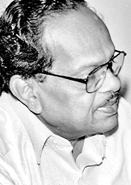 Among all this morass, one figure stands out. Veerasingham Anandasangaree, of the nearly defunct TULF. Jeyaraj has this well written profile of Anandasangaree. Anandasangaree's remains the only legitimate voice in Sri Lanka which articulates a just federal solution to the conflict and that which bases itself on a regime that rejects the authoritarian and exclusivist impulses as characterised by the above mentioned sections of the broad polity.
It is just plain unfortunate that the TULF is hardly any kind of force in Sri Lanka today though. But fierce articulation of the federal agenda by Anandasangaree should eventually force the violent and muddled heads in Sri Lanka today, it is hoped.
Both Jeyaraj and Uyangoda show the ability to think beyond their ethnic confines -something that is a rarity in the ethnic jaundice that has characterised the decades-long war ravaged Sri Lankan country. Both favour a just solution to the conflict and recognise the weaknesses of "identity" based claims of exclusivity that determines the charter on both sides of the conflict. Thus, Jeyaraj fearlessly raises his voice against the authoritarianism of the intransigent and violent LTTE while Uyangoda fiercely critiques any unitarian impulse in the increasingly militant and exclusivist Sinhalese ruling classes. Jeyaraj writes in a host of Sri Lankan and other newspapers (his most recent articles are archived here ), while Uyangoda's incisive pieces appear regularly as part of the "Letter from South Asia" in the Economic and Political Weekly .
Unfortunately very few in the Sri Lankan polity have shown this ability to think beyond the confines of "ethnic exclusivism" in articulating a solution to the conflict or provide a political line during the same. The Sinhalese polity for e.g. is now comprised of the ruling SLFP which, by all accounts, seems to be a family controlled ethnic majoritarian enterprise for all its lip-service to a political federal solution "after" the military defeat of the LTTE. The other parties in the picture include the even more hawkish JVP whose shameless ethnic nationalism belies the party's "left" orientation, the communal Jathika Hela Urumaya, a Buddhist monk party whose politicians are the exact antithesis of Buddha's bhikkus; and the now-hawkish, now-dovish UNP, whose political positions on the conflict change with the wind.
On the Tamilian side, whatever is left of the rump of the polity apart from the LTTE's minions, are all in more ways than some, beholden to the diktats of the Sri Lankan ruling classes.
Among all this morass, one figure stands out. Veerasingham Anandasangaree, of the nearly defunct TULF. Jeyaraj has this well written profile of Anandasangaree. Anandasangaree's remains the only legitimate voice in Sri Lanka which articulates a just federal solution to the conflict and that which bases itself on a regime that rejects the authoritarian and exclusivist impulses as characterised by the above mentioned sections of the broad polity.It is just plain unfortunate that the TULF is hardly any kind of force in Sri Lanka today though. But fierce articulation of the federal agenda by Anandasangaree should eventually force the violent and muddled heads in Sri Lanka today, it is hoped.
Saturday, October 18, 2008
Humanitarian Crisis in Sri Lanka’s “Final battle”

The Sri Lankan army and the Tamil Tigers may be waging their final battle but the suffering of the civilians worsens.
The Sri Lankan government's two-year long strategy of a “military solution” has led it to a situation where it has more or less cornered the Liberation Tigers of Tamil Eelam (LTTE) in the Wanni region in the northern part of the country. But the tactics of an “all out” military operation and the LTTE’s own strategy of using the population of Wanni as cover has resulted in a terrible humanitarian situation for the Tamils in the region, a human crisis that the rest of the world, let along neighbouring India, cannot ignore.
The people of Wanni, caught in the vortex of this “final battle”, have been forced into moving from one war-affected zone to another, even as the Sri Lankan government has turned out aid agencies from the area. At the same time, the LTTE’s desperate tactics has resulted in numerous civilian deaths and the internal displacement of more than 200,000 people according to United Nations agencies. The Sri Lankan government's defence is that the situation is unavoidable and that the Tamil people have no option but to suffer until the LTTE is defeated. Yet, this “military” argument ignores the fact that the Sri Lankan government has been showing no great concern for the hundreds and thousands now on the verge of starvation. Earlier this week UN convoys of food had to turn back because neither side was willing to temporarily end the fighting to allow relief to reach civilians.
It is against this background that the near-entire polity of Tamil Nadu has pressed the government of India to take a strong stance against the government of Sri Lanka's military operations in the Wanni. The threat of the members of Tamil Nadu to resign from Parliament should not be interpreted as merely a chauvinist response to the fact that the LTTE is on the verge of a military defeat. The LTTE has been isolated internationally for its many acts of indiscriminate violence and its failure to be serious about a peaceful settlement, but the Sri Lankan government for its own part has shown its chauvinist face in the events following the end of a lame-duck ceasefire two years ago. For all its rhetoric of building an inclusive Sri Lanka after defeating the LTTE, the Lankan government today hardly pays even lip service to the idea of a multi-ethnic society. The ruling political class openly talks of a “Sinhala” country and the military, given a free hand by the government, has been making unacceptable political statements about the minorities having no right to an equal status. The government, in a mood of triumphalism, has shown an increasingly intolerant face: it has prevented media access to the war-affected areas, sent humanitarian agencies out of the Wanni and rejected all international criticism of military excesses.
Ever since the assassination of Rajiv Gandhi, with the repeated incidents of violence perpetrated by the LTTE and its rejection of a democratic solution to the ethnic crisis, support for this self-styled Tamil representative organisation has waned among political party actors in Tamil Nadu, but for some fringe elements. India's foreign policy toward Sri Lanka, after the disastrous Indian Peace Keeping Force effort, has also been one of non-intervention, something that has been gradually accepted by the mainstream sections of the Tamil Nadu polity as well. Yet it is not surprising that the Tamil Nadu polity has felt a need to express its strong anger against the Sri Lankan action in the Wanni. The current humanitarian crisis in the north of Sri Lanka could well worsen. That would mean a spurt of refugees to India and an even greater expression in Tamil Nadu about the need for the Indian government to intervene, a course of action that is fraught with great danger.
This suggests that the Indian government must, along with other international actors, compel the Sri Lankan government that steps have to be taken to address the humanitarian concerns of the people of Wanni. The silence of India and the rest of the world so far has been interpreted by the Sri Lankan government that it can implement its military solution without any fear of international reprimand and condemnation. There must be a commitment by the Lankan government to enter into a ceasefire with the LTTE which would allow humanitarian aid agencies to provide relief to the beleaguered. The greatest hitch to such a course of action would remain the LTTE's determination to keep the battlefront in the heart of the areas inhabited by civilians. But a besieged LTTE can be pressured by the international community and the global Tamil diaspora to think first of the survival of the hundreds of thousands of Tamils that it claims to represent.
The Sri Lankan government is wrong to assume that the defeat of the LTTE will end the “ethnic problem” as it sees it. The war weary people in the many Tamil speaking areas of the nation may passively accept a final confrontation between the government and the LTTE, but that does not translate into an acceptance of Sri Lanka as primarily a “Sinhala nation”, as the army commander recently claimed. It has been clear for longer than the 25-year-long civil war that a permanent solution can only be one that provides genuine devolution of federal power in an inclusive manner to the Tamils and other ethnic minorities. If this as not happened so far the blame lies as much on the Sri Lankan government and its Sinhala chauvinist supporters as on the intransigence of the LTTE.
Upcoming editorial for Economic and Political Weekly
Saturday, February 09, 2008
Full Blown Conflict -IV
Final part of the Series on Sri Lanka from The Post
Civil wars, especially those arising cantankerously from ethnic divides, create impasses from which the process of extricating peace is the most difficult. The Sri Lankan problem involving the ethnic Sinhalese and minority Tamils is not a one-off case without precedent or parallel in the world. Kurds spread across Turkey and Iraq have fought for an independent Kurdistan; Basques in Spain speaking Euskadi have demanded a separate Basque state carved out of Spain and France; the Portuguese speaking East Timorese achieved independence after a protracted and bloody phase in a fight for independence; and the intra-tribal rivalries that has engulfed Africa are legion.
The formation of a nation is to be determined not merely on the basis of simple identity demarcation, but through the lens of imagination of the constituent masses. In other words, the question to be asked is whether the Sri Lankan Tamils and the Sinhalese have a common imagination of their histories and shared interests within a geographical limit. The presence of substantial intermingling among these communities despite linguistic differences and shared common interests in the form of common professions mean that there indeed is a shared history for the ethnic Sinhalese and the ethnic Tamils in Sri Lanka. It is definitely true that there are regions where ethnicities predominate in their numbers; as in the East and the North that are dominated by the Tamils and the inner parts of the island as well as the south that are constituted mainly of the Sinhalese. But there is also a wide scattering of other minorities as well as the intermingling of either community.
The Liberation Tigers of Tamil Eelam (LTTE) claims a separate nation out of the north and the east on the basis of the incompatibility of the Tamils in a Sri Lankan nation dominated by the Sinhalese. LTTE chief Prabhakaran makes this evocative statement to his followers often that a homeland for the Tamils, which co-exists with a Sinhala state, is due. Central to the argument is that the LTTE imagines a Tamil nation distinct culturally and ethnically from that of the existing Sri Lankan state. The behaviour of the LTTE in negotiations over the past few years has tended to emphasise that they are the sole representatives of not just the Tamil community, but a de facto Tamil state, dealing with the Sri Lankan government. Tamil nationalism for the LTTE is no longer about ‘sharing the Sri Lankan state pie’, but carving a new pie for the community. The LTTE envisages the Eelam to be the homeland of Sri Lankan Tamils in the island and demarcates the geography to cover the north and the east parts of the country. These areas are also home to Muslims who are uncomfortable with the narrow Tamil nationalism and who have been at the receiving end of governance in areas controlled by the LTTE.
Therefore, as such there exists three forms of nationalism in the conflict: Sinhala, Tamil and Muslim. The substantial Muslim population in the east and the north have been lukewarm to the separatist struggle of the Tamils and this lack of enthusiasm has even gone on to take the form of hostility, particularly towards the LTTE. Essentially, the LTTE project of a separate territorial nation-state for the Tamils is hindered by this emphasis on a narrow linguistic nationalism that does not accord the space to minorities such as the Muslims. More or less, this nationalism suffers from the same majoritarian impulses that created enough grievances for the Tamil community to estrange itself substantially from the Sinhala-dominated Sri Lankan political system.
Added to this is the question of how would the Tamil plantation workers (migrants from India in the 20th century) fit within the scheme of Eelam. These workers, based in interior and mainland Sri Lanka, have won political and economic rights after years of trade union struggle represented by the Ceylon Workers Congress (CWC) whose deceased leader S. Thondaman is regarded as one of the strongest working class leaders in the country. This section of the Tamils has participated in the political processes of the Sri Lankan state and has not acceded to the principle of separatism for all Sri Lankan Tamils. Again this means that the narrow Tamil nationalism project envisaged by the likes of the LTTE for an Eelam would not include the Tamils of recent Indian origin, thereby complicating the claims for statehood for all Tamils in Sri Lanka.
Again, it is essentially clear that basing the idea of a new Tamil nation merely on ‘ethnic nationalism’ obscures the real problem in Sri Lanka: the absence of a legitimate civic nationalism that accords a sharing principle to all minorities and is not tied to the interests of the majority. Added to this problem is the fact that there exists a federal state for the Tamils in India in the north. Despite initial demands for an independent ‘Dravida-nadu’ in the early 1950s, the integration of Tamils within India under the principle of linguistic reorganisation of units (states) in a federal union is complete. The Tamilian identity is sufficiently subsumed and integrated within a civic Indian identity. The Tamilians have been successful in instituting their native tongue as one of the nationally official languages and the federal system of governance has ensured that Tamils have equal rights as much as any other linguistic group within the nation. The Indian government is very chary, therefore, about the prospect of an independent Eelam carved out of Sri Lanka based on linguistic ethnic nationalism.
In essence, this author repudiates the fact that the Tamils in Sri Lanka are better off with their own nation-state. The very basis of this nation-state is the same rationale that drove the ethnic conflict in the first place: chauvinist nationalism that was and is still being espoused by many sections of the Sinhala majority. It is, therefore, imperative that the political centre in Sri Lanka makes all efforts to ensure federal rights for the minority Tamils and provide them with large doses of autonomy in several aspects of governance to assure a “shared political future” (as analyst Jayadeva Uyangoda points out). In other words, the plurality of the Sri Lankan state must not only be token, but be real, vibrant and inclusive.
The trouble is to incorporate this rationale in the current political miasma that Sri Lanka is in. As seen in the preceding sections, both the sides in the conflict have now taken intractable positions and hardened military stances ruling out the possibility of reasoned opinion pointing toward a solution to the conflict on the lines argued above. The civil war that has re-erupted with increased hostilities (bombings by the government, guerrilla attacks by the LTTE) has dashed all hopes for a protracted political solution. The government is being naïve in assuming that the LTTE can be destroyed militarily and then peace can be established followed by a political settlement, without considering the psychological impact on the Tamils of the military process. With the absence of a realisation of an inclusive nationalism that does not peter down to a ‘unitary’ state among the Sinhala polity, it is impossible to create an environment for a lasting settlement, even if the LTTE is demolished completely.
The LTTE on the other hand holds on quixotically to a one-point agenda of complete secession, trying to rely upon eventual international sympathy to their project. The political praxis adopted by the LTTE (suicide bombings, terror attacks, political assassinations) is not going to allot it any legitimacy in an increasingly terror-weary international political order. This organisation must give up its irrational emphasis on a one-point agenda and return to talks and ceasefire and agree to a political settlement by involving other sections of the Tamil polity as well. The LTTE can use the internal differences among the Sinhala polity to argue for a civic, shared and integrated nationhood as a first priority and it could take a leaf from the book of the political methods used of late in Nepal by the ex-insurgent Maoists.
To the extent of pushing the Lankan government to stop the military attacks and assure a federal settlement, convincing the Tamil representatives to eschew rebel violence, the international community, especially India can play a pressure group/facilitating role. For the sake of humanity in Sri Lanka and in South Asia, one hopes that such a culmination takes place sooner rather than later.
(Concluded)
Monday, February 04, 2008
Full Blown Conflict -III
Article written for The Post, Lahore
The previous sections dealt with the events as they have happened in Sri Lanka in the recent past. One would be clear that the situation in Sri Lanka is very much a civil war between the Liberation Tigers of Tamil Eelam (LTTE) based in Kilinocchi in north east Sri Lanka and the central government in Colombo. The motivation for the conflict is the claim made by the LTTE that the Tamil population deserve an independent nation carved out of the northern and eastern parts of Sri Lanka. The Sri Lankan government is quite clear that no carving out is possible and the united nationhood of the Sri Lankan island is not going to be compromised.
The question that would be asked first is why at all has this problem erupted between the ethnic communities in the country, even as these communities have been living together for centuries in the island? Clearly the disaffection of the Tamils with the national system has grown out of alienation and maltreatment ever since the formation of an independent Sri Lanka (then known as Ceylon) from imperialist clutches. One has to understand the dynamics of ethnic troubles more thoroughly by studying both the colonial as well as the post-colonial period to answer the question of reasons for disaffection.
One thing is however clear – ethnic hatred between the communities is not a legacy of the ancient past as it is made out to be. The incompatibility of nationalism in countries with high concentrations of multiple ethnicity is a myth that has been a legacy of colonial understanding. That these myths have been used to buttress the idea of ethnic nationalism as the basis of nationhood today is a tragedy of post-colonial history. In fact, some of the biases and distinctions on ethnic basis were itself made by colonialists in Sri Lanka in the form of ethnic censuses that bracketed Tamils, Muslims and ethnic Sinhalese into boxes for bureaucratic purposes. Such a boxing in of myriad people within categories was a case in point in India too, where censuses were done on the basis of caste and religion.
It suited the colonial agenda to create these categories ostensibly to help the policy of ‘divide and rule’, as well as the fact that it reflected the imperialists’ understanding of their colonies and their people, that it was impossible for the colonised to rule themselves because of the myriad differentiations among them. Such thinking was prevalent even among the academicians. Prominent anthropologists for example maintain that primordial identity (caste, creed, religion or language) is a primary problem in the non-coalescing of a nation-state in countries such as India and obviously such logic applied to Sri Lanka as well. The fact that India has survived as a federal nation with its multiplicities of identities puts paid to such theories. The question remains why Sri Lanka has failed to emulate the Indian model effectively.
The ruling class in Sri Lanka (erstwhile Ceylon), just after the decline of the British empire, was represented by forces such as the United National Party, a right wing party leading the interests of the Lankan elite (landed gentry and business classes) that were satisfied with a dominion status under the British empire instead of complete independence. As these forces were pro-market and right wing, vast levels of disenchantment among labour (mostly plantation workers and agricultural labourers) was tried to be warded off by using means to pander to ethnic sentiments, particularly by fuelling the language divide. Widespread anger among the populace on the fact that plantations were still owned by British corporations and that there existed no national bourgeoisie representing the interests of the newly independent nation, was channelled into mobilisations on ethnic lines, due to skillful manipulation of this divide by the ruling elite. Since independence, essentially, the ruling classes pandered to Sinhala nationalism off and on, to exploit the disenchantment with the fact that the Tamils enjoyed a high share of urban government employment and had a high degree of literacy and education as compared to the much high numbers of unemployed among the ethnic Sinhalese.
The emergence of a centre-left, national bourgeois party, the Sri Lankan Freedom Party (SLFP) in the power centre did not change things drastically, as this party nurtured Sinhala nationalism even further. Under the leadership of SWRD Bandaranaike, a Sinhala Only Act was passed that laid the first seeds for the growth of a militant Tamil consolidation. This Act meant that many Tamils in the civil service, for example, were forced to quit their jobs owing to the Sinhala-only policy and ethnic lingual prejudice created a strident rift between the communities. As such therefore, the ruling parties, despite their commitment to varying economic ideologies, worked on ethnic fault lines to buttress their strengths. It is not as if there was no opposition to this opportunism. There existed a strong Leftist party, the Lanka Sama Samaja Party (LSSP), a Trotskyite party that envisaged equal rights for both the Tamils and the Sinhalese in a socialist Lankan republic. The party was successful in forcing the ruling elite to declare Sri Lanka as an independent republic and was able to get the foreign owned plantations nationalised. It was also involved in several trade union movements and struggles. However, the party, having compromised itself in deals with the ruling parties (particularly the SLFP) owing to the inevitable pulls of parliamentarism, gradually weakened, a process that was accentuated by the international split in the Left movement. The disenfranchisement of the Indian Tamil plantation workers was a major blow to the support base of the LSSP too.
In essence the weakening of the Left in Sri Lanka, the only major force to support a political system that accorded equal rights to the minorities, left the political arena to openly ethnic parties. The Janatha Vimuktha Peramuna, an adventurist Leftist party that tried many insurrections to get to power, also based itself on a strong Sinhala nationalism. The continuing Sinhala-only policy and the repeated incidences of extreme violence against Tamil groups saw the rapid militarisation of Tamil outfits and the birth of radical forces such as the LTTE. The deep-seated anger against such lopsided policies by the Lankan government resulted in the marginalisation of even moderate groups such as the Tamil United Liberation Front (TULF). The LTTE took to deadly attacks on the Sri Lankan military forces in an attempt to fuel support for the formation of a separate Tamil Eelam and these sporadic actions took the shape of a full-scale civil war since 1983. Organised pogroms in Tamil areas by the Sri Lankan government and guerrilla attacks by the LTTE marked the start of a prolonged conflict. Many Tamil militants also enjoyed support from covert agencies of the Indian government, as also from the political parties in Tamil Nadu, the south Indian state. The LTTE, through its policy of eliminating internal opposition among the various Tamil militant groups, emerged as the largest militant organisation, particularly in the Tamil dominated city in North Sri Lanka, Jaffna.
Indian intervention to broker peace between the warring sections in Sri Lanka only exacerbated the ethnic differences. While the nationalist elements in Sri Lanka were angered by the intrusion of Indian forces on Lankan soil, the Sri Lankan Tamils found the Indian interventionist action against the LTTE galling. The entire operation was thus a fiasco despite some initial gains and culminated eventually in the LTTE’s assassination of Indian leader Rajiv Gandhi, who had sent the Indian Peace Keeping Force (IPKF) to Sri Lanka. The notorious assassination (just a few years after IPKF withdrawal) started the international isolation process of the LTTE.
Essentially, the story of conflict in Sri Lanka is a complex one, which involves the failure of the elite as well as the subaltern in evolving a consensual republic that based itself on respect to ethnic differences. The success of India to overcome such differences in comparison to the Lankans owe to the largely progressive character of the Indian national movement and the assertion of sovereignty fairly early after independence. Can such a consensus evolve in the future in Lanka, is the question to be answered in the next section.
(to be continued)
Full Blown Conflict -II
Article written for The Post, Lahore.
The preceding section of the series focused on the recent events in Sri Lanka that have created the impasse between the insurgent Liberation Tigers of Tamil Eelam (LTTE) and the government in Colombo. The escalating crisis in Sri Lanka has reached a point of no return from a full-scaled civil war as more bombings and civilian killings have already taken place in the interim since the previous column. This article in the series tries to elucidate the reasons for the escalation of the conflict over the past few years and shows how the efforts made to bring a solution to the impasse have obviously failed.
The ceasefire agreement signed in February 2002 gave legitimacy to the LTTE as a frontal organisation representing minority Sri Lankan Tamils in a war of attrition against the Sinhala majority-led Sri Lankan government. Even though there were other agreements that failed in fructification of peace, the CFA of 2002 was encouraging as it laid out the basis of a comprehensive dialogue between the warring sections. A truce was brokered by a group of co-chairs from the US, Japan, Norway and the European Union (EU) between the Lankan government and the LTTE leadership, based in Kilinochchi city in northern Sri Lanka. The LTTE leadership (chief V. Prabhakaran and the now deceased Anton Balasingham, the chief strategist) negotiated a settlement for peace with the then Prime Minister Ranil Wickremasinghe of the United National Party. Wickremasinghe himself was elected on an agenda of peace in the parliamentary elections concluded in 2001 after the Lankan forces had suffered several military losses and the state had experienced economic pressures during the Kumaratunga-Sri Lankan Freedom Party (SLFP) rule. Wickremasinghe’s peace plan and the response by the LTTE had the effect of ending open and hostile war for a period of time and was also responsible for a negotiated dialogue process through a series of talks between both the parties. The LTTE now also enjoyed legitimacy as a sovereign player in Sri Lankan politics, feted by international missions for multiple talks. Despite such formal privileges, the LTTE retained its covert abilities, and used the detente to target military intelligence personnel in the Sri Lankan government, as well as to assassinate people among the Tamil community inimical to the organisation (TULF leader, Neelan Thiruchelvam, was killed allegedly by the LTTE and so was Kethesh Loganathan, a Tamil human rights activist).
The CFA was thus being violated with impunity by both the LTTE and the Sri Lankan government. The latter, which was supposed to cease hostilities and to recognise LTTE-held territories and to desist from military activities in these areas, did not pay heed to the CFA while capturing LTTE-held areas in the north-east region. One has, however, got to raise the question why the CFA turned out to be a dead-letter agreement without an actual proper implementation and an answer can be found by taking recourse to understanding the Byzantine world of Sri Lankan democratic politics.
The CFA, as mentioned earlier, was signed by the then Prime Minister Wickremasinghe of the UNP when President Chandrika Kumaratunga belonged to the SLFP. Several sections of the Sri Lankan populace, as well as the polity, were upset that the agreement acknowledged the LTTE as a legal and legitimate player, thereby weakening the case for the sovereign hold of the Sri Lankan state on areas in the north and north-east. Political players such as the nationalist Janatha Vimukthi Peramuna and Buddhist parties that favoured a unitary Sri Lankan state were dead against any leeway given to the LTTE or indeed any Tamil nationalist outfit, let alone a separatist force. These sections were strengthened when they became part of a government led by Mahinda Rajapaksa (the current president) of the SLFP after a coalition was formed to defeat the UNP in 2004. The Rajapaksa coalition was able to form a government because Tamils (many of whom were sympathetic toward the UNP for its role in the ceasefire) were prevented from voting in the parliamentary elections in areas controlled by the LTTE. The hawkish coalition, from day one, ratcheted up the confrontation with the LTTE, which simultaneously was engaging in overt violation of the CFA through its own actions. Increasing the hostility between the two sides was the fact that the Lankan government was providing covert support to the breakaway Karuna faction of the LTTE in the eastern regions.
The LTTE, weakened by the breaking away of the Karuna faction was also seriously hurt by growing international isolation. Even as the monitors of the peace mission were deploring the violations of the agreement, a growing international consensus against “any form of terrorism” was hurting the LTTE. The death of chief strategist Anton Balasingham was a big blow, as Balasingham was seen as a moderating influence enjoying wide international access as a representative of the LTTE in the international fora.
Several representatives of the LTTE in various countries such as in the US, the EU and Australia were arrested for involvement in covert arms deals, money extraction from the diaspora and for other reasons. This dealt a serious blow to the LTTE internationally. The Sri Lankan government on the other hand increased its defence budget, and started buying weapons and defence material from various nations such as China and even India. Despite the presence of a Sea Tigers unit and even the use of light aircraft vehicles by the LTTE, the increasing bombing operations by the government targeted at the LTTE strongholds resulted in the death of at least one prominent LTTE leader, S.P. Tamilchelvan.
The strategies adopted by the two parties in the conflict were quite clear: the Lankan government wanted to weaken and destroy the LTTE militarily even as it kept the option of a federal solution to the minority problem open. The LTTE on the other hand, wanted to use the humanitarian crisis generated by the military operation undertaken by the Lankan government to highlight the improbability of a coexistence of the two communities under one sovereign, by alleging that the Lankan state was a majoritarian terrorist state bent upon “genocide”.
The Sri Lankan government’s formal rejection of the CFA now seems to be a political response to the growing demands by the ultra-nationalist segments supporting the government, to annihilate opposition by the LTTE militarily. These sections such as the JVP have for quite some time demanded a ban on the LTTE, as well as the abrogation of the CFA signed by the UNP. The JVP has even rejected a federal solution, retaining its notion of a unitary Sri Lanka rejecting the claims of the ethnic minority to get any respectable share in power. Even though the Sri Lankan government’s military actions against the LTTE in the north and the north-east have not been addressed very negatively by the international community owing to the tactics and actions of the LTTE, the tearing up of the CFA by the government is only bound to loosen the international shackles over the LTTE. The international community including the important neighbour, India, is not pleased with the open civil war that the Lankan government has embarked on, disheartened by the government’s response to the humanitarian problem caused as well as the measures taken against Tamil minorities in the capital city in the name of security.
It is clear that both the government and the LTTE’s visions of a protracted military driven conflict is only bound to obscure the real issues that entail the differences between the minority and the majority community, as well as to belie any hopes of a negotiated settlement of the problem. The LTTE’s reliance on a single point agenda of the formation of a separate state for Sri Lankan Tamils stems from an extremist viewpoint that suggests that a nation can only be formed out of a single communitarian identity, while the Sri Lankan state’s repeated failure in bringing about a political consensus for a federal solution to the problem highlights the entrenched presence of a majoritarian consciousness among the Sinhala polity. The reasons for this entrenchment, as well as the demand for a separate state, can only be explained by a review of the history of the island republic, which should be done in the next segment of this series.
Friday, January 11, 2008
Full Blown Conflict -I
The island republic of Sri Lanka is now officially engulfed by civil war. With the breaking up of the farcical ceasefire agreement (CFA) between the Sri Lankan government and the Liberation Tigers of Tamil Eelam (LTTE), the government has now acknowledged that it has plunged headlong into a full fledged war against insurgents in control of territory in the northern parts of the country. A series of articles will therefore focus on the current situation in the country, a background of the grievances that have created this quagmire and perhaps work out a way out of the impasse. The first part of the series will focus on the events as they stand.
The CFA was signed in 2002 between the two parties, brokered by a group of international monitors led by Norway. The agreement was welcomed widely as it had laid down the possibility of a lasting solution to the ethnic crisis in the nation, torn as it was by years of civil war and strife between the majority Sinhala and the Tamil communities. The Sri Lankan Tamil community's grouse was that they were denied basic rights for years by the Sinhala dominated central government and were at the receiving end of countless massacres led by the federal government. The Sri Lankan government on the other hand had deplored the insurgent tactics used by the LTTE, and claimed that the adoption of political assassinations, suicide bombings and Machiavellian tactics by the LTTE to retain military power was what that led to the impasse between both the parties.
The ceasefire agreement raised the possibility of a federal solution to the conflict and had also provided the first instance of the LTTE's acceptance of such a solution to the vexed ethnic nationality problem. It also gave official recognition to the LTTE's claim of representing the Tamilians. The LTTE was just one of a myriad set of groups fighting for various goals for the Tamil minority, from autonomy to complete independence. Groups such as the Tamil Union Liberation Front (TULF) which had existed for a longer time had advanced moderate methods of achieving goals such as federal autonomy and was endorsed by older and intellectual sections among the Tamils, while the LTTE and other paramilitary groups advocating the creation of a separate Tamil state, Eelam, found favour among younger sections. The LTTE over a period of time had been involved in internecine conflict among the various Tamil groups itself and after a period of attrition had emerged as the undisputed, strong and armed militant organisation. It had simultaneously cultivated an international backing through ties with the vast Sri Lankan Tamil diaspora and had also been supported by several sections of the Tamil polity in the south Indian state of Tamil Nadu.
Indian intervention in the Sri Lankan crisis in the late 1980s had created disenchantment among both the Tamils and the Sinhala sections and the Indian Peace Keeping Force (IPKF) had to leave the Sri Lankan soil without tangible gains in bringing about an end to the conflict. The outcome of the IPKF saga led to the LTTE assassinating Rajiv Gandhi through a suicide bomber, as Gandhi was identified for having been responsible for the intervention in Sri Lanka. Rajiv Gandhi's assassination however had the effect of alienating the LTTE from support in India, as the organisation was banned and its leader V. Prabhakaran was made the prime accused for the Indian leader's brutal murder.
After long periods of civil strife in the 1990s, the Sri Lankan government under then prime minister Chandrika Kumaratunga came forward with a devolution package which was rejected by the insurgents even as killings continued as the Sinhala government wrested back control over strategically important regions such as the Jaffna peninsula in north Sri Lanka. The LTTE had then decided to go in for a detente not just to recoup from its military losses but also to gain legitimacy by setting up governing institutions, thus graduating from a guerilla outfit into a governing authority in some areas in the North and East Sri Lankan regions, after the ceasefire agreement. The LTTE set up policing and revenue collecting organs, as well as judicial courts, even as the tenuous peace held with the reduction in hostilities between the two parties.
The peace however was not to last, as political assassinations and violations of the CFA started with impunity. A big blow to the LTTE was the breaking away of a major commander of the outfit, Vinayagamurthy Muralidharan a.k.a “Col”. Karuna who started his own outfit consisted of disgruntled Tamil extremist elements from the east Sri Lankan region. This group was later to be tacitly supported by the Sri Lankan government forces. The defection of Karuna weakened the LTTE in the eastern parts of Sri Lanka.
The decisive blow to the CFA was the assassination of Sri Lankan foreign minister Lakshman Kadirgamar. Kadirgamar, who was an ethnic Tamil was an articulate minister who had ideas for not just the solving of the ethnic problem but also for increased economic and diplomatic co-operation between different countries in South Asia. Kadirgamar was however a marked man for the LTTE for having tried to convince the case against the insurgents in the international community and his brutal killing by a bullet of an assassin suspected to be from the LTTE, put paid to any hopes of the CFA holding up for longer. The Sri Lankan Monitoring Mission (SLMM) which was set up to monitor incidents that violated the CFA, was now flush with innumerable complaints and violations. Nearly 90% of the violations were from the LTTE side themselves.
The coming to power of a hawkish coalition led by president Mahinda Rajapaksa of the Sri Lankan Freedom Party (SLFP) (supported by left nationalist Janata Vimukti Peramuna (JVP) and the Buddhist religious conservative Jathila Hela Urumaya) put paid to any hopes of reviving the CFA to workable levels. The Rajapaksa administration paid lip service to the question of granting federal autonomy to the Tamil minorities while going in for a full scale military offensive which included targeted air bombings. There were great hopes for a consensus on federal autonomy and an emulation of the Indian model of federalism in Sri Lanka through an agreement between the chief political actors in the Sinhala polity (the SLFP and the opposition United National Party), but it was prevented by petty politicking. An All Party Representative Conference called upon to evaluate a solution through the involvement of the mainstream parties was to become a cropper because of insistence of hardline positions by the JVP.
In the meantime, the military conflict achieved some victories for the Sri Lankan government as top LTTE leaders, political commisar S.P.Tamilchelvan and intelligence deputy “Col.” Charles were killed. But the conflict has escalated the humanitarian crisis in the region, affecting the already traumatised Tamil population greatly. More and more people have been forced to stay in decampments after severe aerial bombing and even the Tamils in cities such as Colombo have been harassed by security agencies ostensibly as a security measure. The LTTE has promised to retaliate in kind, meaning more bombings, suicide killings, and terror attacks in the Sri Lankan capital and other cities are in the offing.
After the tearing up of the CFA, the government has declared its intentions for a full scale assault on LTTE lines in the Wanni region in north Sri Lanka, saying no federal solution is possible without demolishing the LTTE. The LTTE is expected to revert to its time tested guerilla strategy of “hit and runs” and tactical retreats into jungles and many analysts say that the assault would be a long drawn one as the LTTE has withdrawn its cadre from the eastern belt to protect the northern strongholds. The humanitarian crisis is only bound to worsen as this conflict continues to escalate. All hopes raised in 2002 during the ceasefire are shattered and an interminable military confrontation looms large but very near. Future sections of this series will explore the historical basis for the conflict and would try to work out a viable solution, if at all possible.
Article written for The Post, Lahore
Tuesday, December 04, 2007
Down the Spiral in Sri Lanka
Editorial to be published in the EPW next week.
There is a a full fledged civil war in Sri Lanka, with no end in sight
The spate of air attacks by the Sri Lankan air force and the bombings in Colombo and its environs (clearly the work of the Liberation Tigers of Tamil Eelam or LTTE) is one more sign of the spiral of violence that Sri Lanka has once again descended into.
S.P.Tamilchelvan, the leader of the political wing of the Tamil insurgent organisation, was killed in an air attack by the Sri Lankan air force in Killinocchi in northern Sri Lanka. This is seen as retaliation to the earlier LTTE suicide squad and air attack on the Anuradhapura airbase that resulted in a considerable loss of face for the government. Ever since the coming to power of the Sri Lankan Freedom Party (SLFP) led by Mahinda Rajapaksa with the support of the left nationalist Janatha Vimukhta Peramuna (JVP) and the Buddhist monk party, Jathika Hela Urumaya (JHU), both fiercely committed to an “unitary” solution to the ethnic problem in Sri Lanka, the government has taken a hawkish position against the insurgents. The military campaign against the LTTE has intensified every passing day with several attacks on targets in Tamil strongholds as well as gradual weakening of the LTTE's support structure in the diaspora because of the international crackdown against any form of terrorist activity.
The Sri Lankan government's thinking is that a major military victory over the LTTE and its near annihilation is both feasible and desirable. The political arrangement after the military victory would then involve a federal devolution of power to the linguistic minorities, so goes the thinking. On the other hand, the LTTE perceives the relentless campaign against it by the government as an opportunity to get international sympathy and legitimacy for their cause. This web of violence has been pointed out by scholars (Jayadeva Uyangoda, “Back to Square One”, October 27, EPW) as having thought out by both the antagonists to advance strategic goals suited to their ultimate objectives, the establishment of Eelam for the LTTE and maintaining the integrity of the Sri Lankan nation for the Sri Lankan government.
A thaw between the principal Sinhala political parties, the SLFP and the United National Party (UNP), which resulted in a MoU between the parties was short lived, owing to petty reasons of bickering that has characterised relations between these parties for quite some time now. An All Parties Representative Conference (APRC) set up to evolve consensus on the ethnic question also ran into teething troubles, because of the intransigence of the coalition partners of the SLFP government. All this has shown that the talk of a genuine devolution of power to the Tamil minorities basically remains unfulfilled and, in the context of the drawing of daggers by both the government and the LTTE, it seems a far fetched possibility. The LTTE has, on the other hand, arrogated itself the role of the sole representative of the Sri Lankan Tamils by decimating any viable alternative Tamil opposition as the killings of leaders from the Tamil United Liberation Front (TULF), and other Tamil organisations prove.
Experts suggest that the Sri Lankan government's more or less easy victory in the east over the LTTE was possible, because of a tactical retreat by the rebels into the Vanni jungles in north Sri Lanka and that the latter still retain a potent guerilla force. The killing of Tamilchelvan is significant, as he was the political representative and chief negotiator of the LTTE, who was involved in talks with the Sri Lankan government and other participants in the peace process that followed the ceasefire agreement in 2002. The return to high levels of hostilities, Tamilchelvan's killing and the existing political circumstances in Colombo, suggest that no immediate rapprochement between the Sri Lankan government and the LTTE seems possible and the plight of the Tamils in the north is bound to worsen as the attacks and retaliations are bound to continue. Meanwhile passions for support to the Eelam cause are again being whipped up in Tamil Nadu, where Tamilchelvan's death has been termed as martyrdom by pro-Eelam political parties such as the Vaiko-led Marumalarchi Dravida Munnetra Kazhagam (MDMK) and fringe groups. Even the Tamil Nadu chief minister M.Karunanidhi had written a poem in the memory of Tamilchelvan, an act which had drawn criticism from the opposition and the Congress party.
The narrowing of options in Sri Lanka means that sane voices that argue for peace and pitch for innovative solutions involving devolution of power to the minorities, who have long suffered their “second class status” in Sri Lanka, are drowned out in the thirst for military victories.
Subscribe to:
Posts (Atom)