Tuesday, November 25, 2008

EPW Special Issue on 30th anniversary of the Alma Ata Declaration

The following is the set of articles we published in the latest issue in EPW on the 30th anniversary of the Alma-Ata declaration on Primary and Universal Health.

3OTH ANNIVERSARY OF ALMA-ATA


Reflections on Alma-Ata

C Sathyamala

Upon an examination of the development of health services in India, it is evident that the primary health care strategy was a logical outcome and justification for health policies that were (and are) antithetical to the principle of social justice. Thirty years down the line, the village health worker has metamorphosed into the Accredited Social Health Activist, but the health situation cannot be significantly improved without challenging the exploitative social structure.

C Sathyamala (csathyamala@gmail.com) is an epidemiologist and public health scholar based in New Delhi

Thoughts on Alma-Ata and Beyond

Binayak Sen

It is possible today to voice a proposal to take the idea of primary health care, stated in the bold language of the Alma-Ata declaration 30 years ago, forward and work towards making it a reality.

Binayak Sen, a paediatrician, public health professional and national vice-president of the People's Union for Civil Liberties, is the recipient of the tenth annual Jonathan Mann Award for Global Health and Human Rights.

The Complex Truth

George Thomas

A government which believes that medical education and healthcare are best provided by the private sector is deliberately starving government hospitals of funds. Until a clear plan to ensure health for all is in place and the poor demand medical care as a fundamental right, public health services will remain skewed and unjust.

George Thomas (george.s.thomas@gmail.com) is chief orthopaedic surgeon at St Isabel's Hospital, Chennai and editor, Indian Journal of Medical Ethics.

Role of the World Health Organisation

Indira Chakravarthi

The Alma-Ata Declaration of 1978 on Primary Health Care together with the slogan of Health for All by 2000 AD is considered one of the most significant public health initiatives of the 20th century. The 30th anniversary of the declaration provides an opportune time to revisit its history and arrive at some fresh perspectives. This article examines the role of World Health Organisation in developing countries as a directing and coordinating authority on international health, and in providing impartial, evidence-based technical information.

Indira Chakravarthi (indira.chakravarthi@yahoo.co.in) is a public health researcher based in Delhi.

Monday, November 24, 2008

Transition to Multiparty Democracy

There is widespread optimism as a pro-democracy activist is elected president in the Maldives.

After a prolonged 30-year rule by former president Abdul Gayoom, the Maldives elected prominent opposition leader Mohammad Nasheed (“Anni”) in the country’s first truly democratic presidential elections. Nasheed won the run-off presidential elections by capturing 54% of the votes.

Gayoom’s iron-fisted rule, marred by corruption, nepotism, cronyism, and stifling of any political dissent had remained unchallenged until these elections. Nasheed was at the receiving end of Gayoom’s actions against political dissidents in the country. An activist who had been sentenced to prison 23 times, was 18 months in solitary confinement and underwent torture in prison, Nasheed had founded his opposition party, the Maldivian Democratic Party (MDP) overseas in Sri Lanka only in 2003. This was in the aftermath of a civil demonstration in the capital Male against Gayoom, which resulted in riots and unrest.

Generous political help followed from international actors as Nasheed was given refuge in the United Kingdom, where he and his party colleagues built up support for their “cause” – ushering in genuine democracy in Maldives. After his return to the Maldives, Nasheed consolidated his support base by engaging in campaigning across the nation’s islands. Facing continual unrest due to anger against his rule, and relentless demonstrations for a democratic Maldives, Gayoom tried to use repressive measures to stem the discontent against his regime. But, adverse international opinion mounted after the international community’s involvement in tsunami relief in 2004.

All this pressure eventually forced Gayoom to accept a relatively peaceful transition to political pluralism which paved the way for the recognition of the MDP as an opposition party in 2005. Later, Gayoom had to allow the enactment of a new democratic constitution in August 2008 and schedule presidential elections in October 2008. Parliamentary elections are also slated for February 2009.

The new democratic constitution, for the first time, brought about a separation of powers in the Maldives, with the powers of the judiciary statutorily demarcated from those of the head of state. The constitution gives importance to the tenets of Islam which is the State religion, while at the same time guaranteeing a regime of rights and freedoms, apart from the separation of powers as between institutions such as the Majlis (parliament), the presidency and the judiciary. Under popular pressure, Gayoom’s otherwise autocratic political legacy gave way to permitting a transition to a constitutional, democratic republic.

Mohammad Nasheed inherits a Maldives whose economy has been relatively prosperous in terms of per capita income, largely due to high returns from tourism and foreign investment. But, this record is marred by high levels of inequality and youth unemployment buttressing crime. Nasheed’s immediate challenge remains mitigating the negative impact of the global financial crisis on the economy which is over-reliant on tourism and its associated sectors. He had campaigned on a platform of diversification of the economy beyond tourism and fishing, and this would be a priority task for his government. The other challenge that president Nasheed faces is the effect of global warming on the Maldives. Practically the entire population of the country, living in its chain of atolls, is threatened by the rise of sea water level.

The transition to multiparty democracy and the election of Mohammad Nasheed, a pro-democracy activist, to the post of president, one who has shown no rancour against his former tormentors and political rivals, should facilitate the task of addressing the many challenges facing the country.

Editorial written for the Economic and Political Weekly

Tuesday, November 18, 2008

Bihar Floods Special Issue on EPW


Floods are a perennial problem in Bihar. The very same water source that acts as the life-blood for the agriculture-dependent population in the state, turns into an avalanche of death and misery every year. And every year, as this natural disaster strikes, it evokes temporary attention to the plight of the victims and soon to be forgotten government commissions and helicopter visits by the bourgeois polity. But once the shock value of the images fades away, all is forgotten even if misery is compounded and the people are made to brace up for the next year's natural fury. Such is the case of floods in Bihar. The Kosi river- a dynamic, sediment carrying water body is particularly driven to course-changes and therefore to put paid any plans to tame the river (through the embankment strategy that has been adopted for years). That the fact that this river originates across national borders in Nepal makes the problem even more complicated. Four experts - whose intros are provided in the post- with substantial understanding of the problem through different forms of expertise weigh on the Kosi tragedy and the perennial woes of river management and floods. They even venture to offer solutions. Following are the links to these articles published in the Economic and Political Weekly.

BIHAR FLOODS

Floods, Himalayan Rivers, Nepal: Some Heresies
Ramaswamy R Iyer

The strategy of building embankments to constrain river flow and to prevent floods in north Bihar has proven to be questionable and flawed. Reliance on a dam-and-reservoir system for that purpose only offers limited protection and even greater risks of flooding in case of damage. Learning to cope with floods and managing a transition to a system that does not rely upon the embankments any more seems to be the rational course of action.

Ramaswamy R Iyer (ramaswamy.iyer@gmail. com) is with the Centre for Policy Research and has written extensively on issues related to water.


Management of Floods in Bihar
C P Sinha

A combination of short- and long-term measures that gives importance to both structural (traditional) means and non-structural techniques is required to solve the perennial flood problem in north Bihar.

C P Sinha (c_p_sinha@rediffmail.com) headed the Second Bihar State Irrigation Commission and was also associated with Indian Institute of Technology, Roorkee.


Kosi: Rising Waters, Dynamic Channels and Human Disasters
Rajiv Sinha

The recent Kosi floods have proved once again that inadequate control measures have been responsible for the recurring disasters. Typically flood control and riverine studies focus on hydrological information, whereas a much more integrated approach that pays attention to specific morphological factors is required. Since Kosi is a dynamic river with a unique morphology and because it is a river which has always carried high sediment loads, flood management strategies must be attuned to such specific parameters of the river, besides being much more than mere “river control” through embankments.

Rajiv Sinha (rsinha@iitk.ac.in) is with the Department of Civil Engineering, Indian Institute of Technology, Kanpur.


The Kosi and the Embankment Story
Dinesh Kumar Mishra

The Kosi afflux bundh breached in Kusaha in Nepal on 18 August 2008. This was the eighth incident of its kind and the first time did a breach occur upstream of the Kosi Barrage. The ones in 1968 and 1984 were no less disastrous but this year’s breach has generated the most concern and its international dimension has added an edge. In an effective life of 45 years, the embankments have remained intact for 37 years. What happens to the people who have suffered the wrath of the river nearly five times more than those in the areas protected by the embankments?

Dinesh Kumar Mishra (dkmishra108@gmail.com) has been working on water-related issues in Bihar for many years and is the convenor of the Barh Mukti Abhiyan, a civil society organisation working with the people living in flood-prone areas in the region.

Monday, November 17, 2008

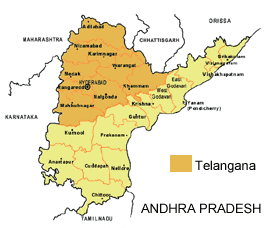
Telangana Demand

The demand for Telangana state has new takers as the Telugu Desam Party changes tack on the issue.

The decision of the Telugu Desam Party (TDP) to support the creation of a separate Telangana state is a volte face. The decision is also significant because the TDP is the principal opposition party in the state and has hithero vociferously opposed such a move. It is clear that the TDP’s moves are aimed at attracting support in the Telangana region. The TDP had always positioned itself as a party with a base in all the Telugu-speaking regions of Andhra Pradesh.

The TDP split in 2001 leading to the formation of the Telangana Rashtra Samiti (TRS), which renewed the agitation for a separate state but with no returns so far. The TRS alliance with the Congress in the last assembly elections in 2004 had hurt the TDP and the latter’s recent change in position has brought it closer to the Telangana party, thereby creating the possibility of an alliance against the ruling Congress Party in the assembly elections in 2009.

Political calculations apart, the TDP’s about-turn means that the idea of a separate Telangana state now enjoys currency among almost all of the major political parties in the state except for the non-committal Congress, and the Communist Party of India (Marxist) – CPI(M). Even the newly formed Praja Rajyam of the actor Chiranjeevi has recently suggested that it is open to the idea of a separate Telangana.

More than five decades after the state of Andhra Pradesh was constituted by merging the Telugu-speaking areas that were part of the Nizam of Hyderabad’s dominions with the linguistic coterminous areas of Madras Presidency, grievances over lopsided development remain. The Telangana region suffers from inadequate irrigation, higher rates of poverty, poorer health facilities and higher unemployment in comparison to other regions in the state. One of the reasons for underdevelopment is the fact that Telangana inherited a feudal political and economic structure from the days of the Nizam, other reasons relate to the failure by successive governments to implement promised measures in the state.

The persistence of these grievances among the populace of the region has resulted in many a political party eventually coming to support the demand for a separate state. Even the Congress Party, following a Congress Working Committee resolution that was adopted before the 2004 assembly elections, had promised to take up the issue, through the aegis of a second state reorganisation commission to look into the formation of new states. Inaction and indifference by the Congress forced the TRS to break its alliance with the party and withdraw from the United Progressive Alliance. The CPI(M), on the other hand, has consistently rejected the formation of a new state, arguing that the neglect of the region can be rectified by focusing on prioritised development of the backward areas in Andhra Pradesh.

The formation of Andhra Pradesh after a concerted movement marked the beginning of the linguistically determined federal reorganisation process. The coherent division on a linguistic basis has, contrary to the fears expressed in the mid-1950s, helped strengthen the democratic federal framework. Yet, the political institutional set-up and the mode of development (primarily capitalist) within several states have created intra-state disparities. The opposition to the demand for a Telangana state is posited on the logic that the creation of such a state would open a Pandora’s box for other intrastate regional areas to stake their claims for separate states as well. This argument underestimates the alienation of backward regions.

Many grievances gather emotive steam through appeals to cultural differences. That is when the logic of “linguistic coherence” inevitably loses appeal. It is obvious that only a focus on removing disparities can prevent such situations, but it requires political will to address structural inequalities. In the case of Telangana, for example, land reforms and other socio-economic measures to address poverty and semi-feudalism should be the immediate remedy. But with the political leadership more interested in a model of development that is decidedly urban-centric, private investment-driven and engaged only in token welfarism, is it possible to prevent the demand for a new state?

Editorial written for the Economic and Political Weekly

"Spindian Express"

Vijay Prashad's article in Counterpunch last week about Sonal Shah's participation in Hindu right-wing activity in the United States (she was national co-ordinator of the dreaded Vishwa Hindu Parishad's America wing in 2001), created a furore. The noise generated after the publication of article at Counterpunch and here, was directly proportional to the hype surrounding Shah's nomination into Barack Obama's advisory transition team - a phenomenon that generally sees chest-thumping at any expatriate Indian's coming to prominence in the United States.

Prashad's article drew a few responses among India's own self-styled "liberal" community. Political Scientist Pratap Bhanu Mehta along with CII mentor Tarun Das and others came up with a response that went in essence, thus - Sonal Shah has impeccable credentials, she has never espoused Hindu right wing views, and those who are raising questions about her past "associations" are basically committing an act of witch-hunting.

Nowhere in the statement is it mentioned that Shah was the national co-ordinator and an active member of the VHP-A in 2001. Shah, herself in this statement, asserted that she had nothing in common with the VHP or the RSS, but she did not repudiate the fact that she had worked for the VHP-A (for earthquake relief, for which she expressed her pride). She also called the allegations of her associations with the VHP-A, false and baseless in her statement.

Vijay Prashad in turn came up with a further riposte that elucidated clearly that the allegations against Ms Shah were not on the basis of "mere association" but on the sound basis of "guilt by participation".

So much for the context. Interestingly, the decidedly right-wing paper in the country today (someone would ask me which paper is not, in India today), the Indian Express editorialised on the issue thus.

The funny statement in the editorial is this:

Her participation in collecting Gujarat earthquake relief and an organisation’s invitation to her to speak at its event have been transformed into apparently inarguable evidence of her identification with illiberal politics. This is shocking.
To the dudes at Indian Express, the "an organisation" for which Ms Shah collected relief and acted as co-ordinator was the Vishwa Hindu Parishad-America, which co-ordinates activities for its parent organisation in India today for fund-raising -- money which is used to build the hate network that today operates with non-chalant disgrace and monstrosity in Orissa (Kandhamal), Karnataka and elsewhere (Gujarat circa 2002.. do you remember? ). Is this tangential??! And the organisation which invited her to speak was yet another of the RSS' many front organisations - the Ekal Vidyalaya .

Notice the clever use of "an organisation" instead of VHP-A or the Ekal Vidyalaya, by the Spindian Express. Don't you easily fail with a grade of F on accuracy, dudes?

And more:

But in diverse, robust democracies like India and America, judgment calls, especially about potential holders of public office, require a real appreciation of what it means to be a liberal: oppose all witch-hunts.
Oppose all Witch-hunts! That is rich, coming from the Witchhuntian Express! Remember Pratibha Patil's nomination to the post of President? And the daily saga of front page reports claiming her guilt in the failings of the co-operative banks she helped set up in Maharashtra? Here , here , and the best of all, here - Shekhar Gupta makes a case for the application of " due diligence " to vet the process of selection of India's highest constitutional post.

Call it "witch-hunting" or the press' right to explore the past of a public official, depending on where you stand.. there is always going to be questions raised on accountable public officials. If Pratibha Patil (deservedly, in my opinion) can be subjected to this amount of scrutiny for founding co-op banks which later (after 30 years) went bankrupt.. by the newspaper; how can it deny the same due diligence that goes about establishing credentials of a public official in the United States- Ms Shah, who was incontrovertibly, the member of the foreign wing of one of India's most dreaded medieval outfits - the VHP?

Double Standards, anyone? "Illiberalism", no? Well. that comes with the territory of Indian Express, no doubt.

Sunday, November 16, 2008

Anandasangaree and the diminished voice of reason in Sri Lankan politics

Of all the commentators, news analysts and academicians who are writing about embattled Sri Lanka and the long drawn out ethnic conflict in the country, I find the most truthful, progressive and humane analysis coming from two sources - one a fearless Tamil expatriate journalist named DBS Jeyaraj and the other an intrepid Sinhalese political scientist, Jayadeva Uyangoda.

Both Jeyaraj and Uyangoda show the ability to think beyond their ethnic confines -something that is a rarity in the ethnic jaundice that has characterised the decades-long war ravaged Sri Lankan country. Both favour a just solution to the conflict and recognise the weaknesses of "identity" based claims of exclusivity that determines the charter on both sides of the conflict. Thus, Jeyaraj fearlessly raises his voice against the authoritarianism of the intransigent and violent LTTE while Uyangoda fiercely critiques any unitarian impulse in the increasingly militant and exclusivist Sinhalese ruling classes. Jeyaraj writes in a host of Sri Lankan and other newspapers (his most recent articles are archived here ), while Uyangoda's incisive pieces appear regularly as part of the "Letter from South Asia" in the Economic and Political Weekly .

Unfortunately very few in the Sri Lankan polity have shown this ability to think beyond the confines of "ethnic exclusivism" in articulating a solution to the conflict or provide a political line during the same. The Sinhalese polity for e.g. is now comprised of the ruling SLFP which, by all accounts, seems to be a family controlled ethnic majoritarian enterprise for all its lip-service to a political federal solution "after" the military defeat of the LTTE. The other parties in the picture include the even more hawkish JVP whose shameless ethnic nationalism belies the party's "left" orientation, the communal Jathika Hela Urumaya, a Buddhist monk party whose politicians are the exact antithesis of Buddha's bhikkus; and the now-hawkish, now-dovish UNP, whose political positions on the conflict change with the wind.

On the Tamilian side, whatever is left of the rump of the polity apart from the LTTE's minions, are all in more ways than some, beholden to the diktats of the Sri Lankan ruling classes.

Among all this morass, one figure stands out. Veerasingham Anandasangaree, of the nearly defunct TULF. Jeyaraj has this well written profile of Anandasangaree. Anandasangaree's remains the only legitimate voice in Sri Lanka which articulates a just federal solution to the conflict and that which bases itself on a regime that rejects the authoritarian and exclusivist impulses as characterised by the above mentioned sections of the broad polity.

It is just plain unfortunate that the TULF is hardly any kind of force in Sri Lanka today though. But fierce articulation of the federal agenda by Anandasangaree should eventually force the violent and muddled heads in Sri Lanka today, it is hoped.


Wednesday, November 12, 2008

Us versus them


Article written for the newspaper, "Mid-day"... Linked here. The nice cartoon courtesy the paper is also reproduced here. All credits to Mid-day.

Us versus them

How does the recently-concluded US electoral campaign compare to the on-going one in India?

Barack Obama's election as the 44th president of the United States marked a seminal moment in American politics. It was a symbolic victory for the historically traumatised African-American population in the United States to have one of their "own" elected to the highest executive post in their country.

The question that is much asked in India's chattering discussion circles in the media is whether there is going to be an Indian version of an Obama and an Obama-like victory based on the message of "change". Only the political systems and processes of the two democracies have so many contrasts as of today that it is too simplistic to expect a similar outcome in the upcoming Indian Lok Sabha elections as in the US presidential elections.

It is clear that the American public have risen above the latent expressions of fear and hate that have jaundiced their past, to move their country away from the woeful legacy of George W Bush and his neoconservative administration. It took an inspired campaign based on strong volunteer activity, networking technologies and innovative "messaging" for Obama to achieve the victory in the US electioneering system that is highly media-driven and which relies on portraying differences in "image" and "packaging of messages".

The socio-politico-economic situation in the USA compares well with what is going on in India today. There is a rejuvenation of hate for the "other", as terror attacks (in many urban centres) and communalism (in Orissa and Karnataka) has ravaged all corners of the country. The agrarian economy has been stagnant and farmers are still under duress, despite concessions by the government. The boom time in the services economy that lasted a few years threatens to come to a screeching halt, as India faces as much of a financial and economic downturn as the global economy. Long time wounds in India such as Kashmir are festering up again. Demands for statehood based on ethnic identity (Gorkhaland) and socio-economic discrimination (Telangana) have reared up again. Competitive regionalism and chauvinism have threatened to disrupt normal life in Maharashtra, Uttar Pradesh and in Bihar.

The government of today is hard-pressed to address all these effectively, owing to a mixture of reasons from incompetence, misplaced priorities, leadership and sheer lack of will. Just like in the US, India will also go for elections soon, with the "hope" that the next elected dispensation will address the issues. Only four years ago, the people had given a mandate all across India against the NDA alliance for its handling of the agrarian crisis, growing inequality and support to communalism.

There is therefore a similarity with the American situation, but the contrasts between the political systems in these countries are stark. In a presidential system like the US, political differences get personalised and issues get subordinated to image and character of the candidates. There is also the preponderance of the two major parties, the Democratic Party and the Republican Party, whose candidates crowd out other "third" party candidates in funding, media coverage and ballot access.

This was what precisely happened in the current presidential elections. The concurrent Congressional elections to the Senate and the House of Representatives were also influenced by the larger show of the Obama-John McCain fight, as the theme of "change" helped the Democratic Party win a majority of the Congressional seats over the Republican party.
In India however, the polity is not restricted to a two party system. India is a strongly federalised union of many states with deeper and wider, linguistic and identity differences than the US. The multiplicity of various parties, both regional and national therefore complicate the process of elections, with issues and factors at the national level having outcomes based on regional equations which depend on factors such as caste alliances. Thus, coalition politics rules the roost in this country as various parties converge upon bigger alliances. This has taken the shape of three broad entities: the UPA led by the Congress, the NDA led by the BJP and the Third Front including the Left and the BSP.

To a great extent thus, the Indian political system offers a higher number of choices for different constituencies; for peasants, the urban middle class, the dalits, the small landowners, the businessmen and the workers and of course the category of "castes". In the US however, the predominance of the two party system meant that voters had no choice but to choose the better of the two options or for some, the least worse off of them. For example, in economic policy; McCain and Obama differ on regulation of financial markets, but ended up favouring a taxpayer funded bailout of failed financial firms, restricting their solutions to the financial crisis to mere liquidity injection. In contrast, there is wider choice for the Indian voter in economic policies — for some parties support greater liberalisation and privatisation, some are dead opposed and some prefer a regulated approach. Except that being a third world country, not all Indians are aware about such differentiation in policy and merely vote on the basis of issues of identity — their caste, religion or regional pride.

Similar to the US, issues and agendas do converge into abstract qualities such as leadership; and no wonder, each alliance is keen to project its best face as the prime leader. And just as Barack Obama's win was seen as much as any African American's win, Mayawati of the BSP would want to win as the Dalit representative. But while Obama highlighted his personality and demeanour to win over support which transcended skin colour, Mayawati would have to pitch her party's slogan of "sarva-samaj" by stitching together a larger caste alliance.

Both democracies therefore have their strengths and their deficiencies, but the redeeming factor remains the voter. If in the US, Americans rose above their partisan divisions to vote Obama as the alternate to Bush's legacy, in India too, voters need to rise above mere "restrictive identities" to elect their representatives who are capable and offer value as policymakers and executives. Using Obama's words, the challenge is to achieve a "more perfect union" and there is no other means but the ballot box.

The writer works for the editorial board of Economic & Political Weekly

Wednesday, November 05, 2008

President Barack Hussein Obama


Obama's win through a impeccable presidential campaign heralds a significant moment in US history

Barack Hussein Obama is now the 44th president of the United States of America. For the lone African American senator in the senate (he has merely served 4 years) with a composite ethnic and racial upbringing, a former community organiser and a constitutional law expert; being elected to the presidency is a major accomplishment. That Obama has achieved this victory representing the Democratic Party in a country that had racial segregation only forty years ago underlines the significance of his win for the nation.

Barack Obama was able to not only win the “electoral vote” decisively by capturing more than 350 of the 538 electoral college votes, he even carried nearly 53% of the popular vote, thus defeating his opponent from the Republican party, John McCain, resolutely. Obama's comprehensive triumph is reflected in the fact that he won in hitherto strong Republican states such as Virginia, North Carolina and Indiana, besides winning in the traditional battleground states such as Ohio and Florida and capturing states that voted for Bush in 2004 - Iowa, Nevada and Colorado.

The unpopularity of the George Bush regime, a recession like situation engulfing the nation's economy, the long drawn out military occupation of Iraq have all contributed to McCain's defeat, apart from the drubbing that his party received in the concurrent senatorial and congressional elections. As of November 5, the Democratic Party had a representative in the White House in Barack Obama, had a decisive majority in the Senate (with atleast 56 seats) and in the Congress. The widespread Democratic victory is an indication that the philosophy of unregulated “free market economics”, naked militarism, and the politics of fear that characterised Republican rule for the past eight years during the presidency of George W. Bush have been thoroughly rejected by the electorate.

It is not as if the Democratic Party had much to offer in the form of alternatives to the Republican philosophy or that Barack Obama had a substantial programme of “change”, even if he made it the theme of his campaign. On foreign policy, Obama's views were for the continuity of an unilateral course of action by the imperial United States against it's perceived threats – he merely had a problem with the diversion of the “war on terror” to Iraq and he has promised a change in “battlegrounds” to Afghanistan and even Pakistan.

On economic policy, he promised regulation of speculative financial activity, but no major course-change involving state intervention in reviving the economy beyond liquidity injection into capital markets, or anything beyond protectionism in reviving employment. But on some domestic issues such as healthcare, social security and energy policy, even Obama's centrist positions were enough to draw a contrast to the rabid market fundamentalism of his Republican counterpart. That he had a sound and pioneering understanding of the use of networking technology in garnering funds from many small donors on the internet, and had promised solutions in building energy alternatives to counter climate change were also great pluses. Barack Obama's ability to draw large numbers of the youth in the country transcending race and political partisanship, through clever marketing of his agenda of “change” was the hallmark of his year-long campaign.

The US presidential elections system consisting of long drawn out party primaries essentially featuring only the two major parties, followed by extensive campaigning leading up to the final polls, places a very high emphasis on formal aspects of candidature such as image and the correct packaging of an enduring message for the campaign. Obama was consistent in harping on the message of “change”, contrasting himself to the incumbent president and by linking John McCain to the failed presidency of George W. Bush. McCain on the other hand, tried initially to emphasise his experience, then reverted to “change” highlighting the “maverick character” of himself and his running mate, Sarah Palin, only to run into the deepening economic crisis with no specific ideas. This led his campaign to turn negative and to try to play upon the subliminal feelings of racism and the fear of the “other” in many Americans. That none of the “high voltage” accusations and the politics of fear could help McCain win, pointed out to how much American citizens had got tired with this phenomenon, yet another legacy of George W. Bush and his party's politics.

He might have achieved a significant victory, but Barack Obama's upcoming presidency faces tremendous challenges. He would preside over a new administration at a time when the US is widely hated across the world for the imperial excesses of the current regime. He will inherit and have to repair a trillion dollar deficit economy ravaged by war spending, debt and which faces a financial crisis nearly as severe as the Great Depression of the 1930s.

His packaged message of “change” was good enough to win an election by transcending partisan political differences expressed as the “conservative” versus “liberal” debates among ordinary Americans and by overcoming the politics of hate and fear. But only a substantive policy orientation- welfare and employment friendly economic policies, rejection of imperialism and unilateralism while strengthening cooperation and multilateralism in international affairs- will result in genuine and transcendent change in the US, attributed to president Barack Obama.


Upcoming editorial for the Economic and Political Weekly

Nader on President Obama

While it is indeed a majestic moment for United States to see an African-American to be elected as the president of the country, a progressive in the United States has her task cut out. How? and Why? This is why and how... Ralph Nader, Independent presidential candidate writes an open letter to "President-elect" Barack Obama:

Open letter to Senator Barack Obama

Dear Senator Obama:

In your nearly two-year presidential campaign, the words "hope and change," "change and hope" have been your trademark declarations. Yet there is an asymmetry between those objectives and your political character that succumbs to contrary centers of power that want not "hope and change" but the continuation of the power-entrenched status quo.

Far more than Senator McCain, you have received enormous, unprecedented contributions from corporate interests, Wall Street interests and, most interestingly, big corporate law firm attorneys. Never before has a Democratic nominee for President achieved this supremacy over his Republican counterpart. Why, apart from your unconditional vote for the $700 billion Wall Street bailout, are these large corporate interests investing so much in Senator Obama? Could it be that in your state Senate record, your U.S. Senate record and your presidential campaign record (favoring nuclear power, coal plants, offshore oil drilling, corporate subsidies including the 1872 Mining Act and avoiding any comprehensive program to crack down on the corporate crime wave and the bloated, wasteful military budget, for example) you have shown that you are their man?

To advance change and hope, the presidential persona requires character, courage, integrity-- not expediency, accommodation and short-range opportunism. Take, for example, your transformation from an articulate defender of Palestinian rights in Chicago before your run for the U.S. Senate to an acolyte, a dittoman for the hard-line AIPAC lobby, which bolsters the militaristic oppression, occupation, blockage, colonization and land-water seizures over the years of the Palestinian peoples and their shrunken territories in the West Bank and Gaza. Eric Alterman summarized numerous polls in a December 2007 issue of The Nation magazine showing that AIPAC policies are opposed by a majority of Jewish-Americans.

You know quite well that only when the U.S. Government supports the Israeli and Palestinian peace movements, that years ago worked out a detailed two-state solution (which is supported by a majority of Israelis and Palestinians), will there be a chance for a peaceful resolution of this 60-year plus conflict. Yet you align yourself with the hard-liners, so much so that in your infamous, demeaning speech to the AIPAC convention right after you gained the nomination of the Democratic Party, you supported an "undivided Jerusalem," and opposed negotiations with Hamas-- the elected government in Gaza. Once again, you ignored the will of the Israeli people who, in a March 1, 2008 poll by the respected newspaper Haaretz, showed that 64% of Israelis favored "direct negotiations with Hamas." Siding with the AIPAC hard-liners is what one of the many leading Palestinians advocating dialogue and peace with the Israeli people was describing when he wrote "Anti-semitism today is the persecution of Palestinian society by the Israeli state."

During your visit to Israel this summer, you scheduled a mere 45 minutes of your time for Palestinians with no news conference, and no visit to Palestinian refugee camps that would have focused the media on the brutalization of the Palestinians. Your trip supported the illegal, cruel blockade of Gaza in defiance of international law and the United Nations charter. You focused on southern Israeli casualties which during the past year have totaled one civilian casualty to every 400 Palestinian casualties on the Gaza side. Instead of a statesmanship that decried all violence and its replacement with acceptance of the Arab League's 2002 proposal to permit a viable Palestinian state within the 1967 borders in return for full economic and diplomatic relations between Arab countries and Israel, you played the role of a cheap politician, leaving the area and Palestinians with the feeling of much shock and little awe.

David Levy, a former Israeli peace negotiator, described your trip succinctly: "There was almost a willful display of indifference to the fact that there are two narratives here. This could serve him well as a candidate, but not as a President."

Palestinian American commentator, Ali Abunimah, noted that Obama did not utter a single criticism of Israel, "of its relentless settlement and wall construction, of the closures that make life unlivable for millions of Palestinians. ...Even the Bush administration recently criticized Israeli's use of cluster bombs against Lebanese civilians [see www.atfl.org for elaboration]. But Obama defended Israeli's assault on Lebanon as an exercise of its 'legitimate right to defend itself.'"

In numerous columns Gideon Levy, writing in Haaretz, strongly criticized the Israeli government's assault on civilians in Gaza, including attacks on "the heart of a crowded refugee camp... with horrible bloodshed" in early 2008.

Israeli writer and peace advocate-- Uri Avnery-- described Obama's appearance before AIPAC as one that "broke all records for obsequiousness and fawning, adding that Obama "is prepared to sacrifice the most basic American interests. After all, the US has a vital interest in achieving an Israeli-Palestinian peace that will allow it to find ways to the hearts of the Arab masses from Iraq to Morocco. Obama has harmed his image in the Muslim world and mortgaged his future-- if and when he is elected president.," he said, adding, "Of one thing I am certain: Obama's declarations at the AIPAC conference are very, very bad for peace. And what is bad for peace is bad for Israel, bad for the world and bad for the Palestinian people."

A further illustration of your deficiency of character is the way you turned your back on the Muslim-Americans in this country. You refused to send surrogates to speak to voters at their events. Having visited numerous churches and synagogues, you refused to visit a single Mosque in America. Even George W. Bush visited the Grand Mosque in Washington D.C. after 9/11 to express proper sentiments of tolerance before a frightened major religious group of innocents.

Although the New York Times published a major article on June 24, 2008 titled "Muslim Voters Detect a Snub from Obama" (by Andrea Elliott), citing examples of your aversion to these Americans who come from all walks of life, who serve in the armed forces and who work to live the American dream. Three days earlier the International Herald Tribune published an article by Roger Cohen titled "Why Obama Should Visit a Mosque." None of these comments and reports change your political bigotry against Muslim-Americans-- even though your father was a Muslim from Kenya.

Perhaps nothing illustrated your utter lack of political courage or even the mildest version of this trait than your surrendering to demands of the hard-liners to prohibit former president Jimmy Carter from speaking at the Democratic National Convention. This is a tradition for former presidents and one accorded in prime time to Bill Clinton this year.

Here was a President who negotiated peace between Israel and Egypt, but his recent book pressing the dominant Israeli superpower to avoid Apartheid of the Palestinians and make peace was all that it took to sideline him. Instead of an important address to the nation by Jimmy Carter on this critical international problem, he was relegated to a stroll across the stage to "tumultuous applause," following a showing of a film about the Carter Center's post-Katrina work. Shame on you, Barack Obama!

But then your shameful behavior has extended to many other areas of American life. (See the factual analysis by my running mate, Matt Gonzalez, on www.votenader.org). You have turned your back on the 100-million poor Americans composed of poor whites, African-Americans, and Latinos. You always mention helping the "middle class" but you omit, repeatedly, mention of the "poor" in America.

Should you be elected President, it must be more than an unprecedented upward career move following a brilliantly unprincipled campaign that spoke "change" yet demonstrated actual obeisance to the concentration power of the "corporate supremacists." It must be about shifting the power from the few to the many. It must be a White House presided over by a black man who does not turn his back on the downtrodden here and abroad but challenges the forces of greed, dictatorial control of labor, consumers and taxpayers, and the militarization of foreign policy. It must be a White House that is transforming of American politics-- opening it up to the public funding of elections (through voluntary approaches)-- and allowing smaller candidates to have a chance to be heard on debates and in the fullness of their now restricted civil liberties. Call it a competitive democracy.

Your presidential campaign again and again has demonstrated cowardly stands. "Hope" some say springs eternal." But not when "reality" consumes it daily.

Sincerely,
Ralph Nader

Ohio. Ohio. Ohio..!

Tim Russert, the iconic pressman who anchored the "Meet the Press" programme on NBC, was reputed for calling the pivotal point ("Ohio, Ohio, Ohio") in the past two elections. Russert breathed his last a few months ago. But he must be smiling in his grave to see that Ohio has already been projected as an Obama victory (at the time of writing, CNN, Fox, NBC, MSNBC had all called Ohio as Obama's win)..

And that means... that Barack Obama is the new president of the United States of America.

Monday, October 27, 2008

Into Deep Space

India’s moon probe has fascinating possibilities in scientific research, but will it stop there?

Image courtesy www.sstd.rl.ac.uk

With the launch of the Chandrayaan-1 spacecraft from the Polar Satellite Launch Vehicle, the Indian Space Research Organisation (ISRO) has taken a vertical leap into “deep space” exploration, after decades of a focus on launching communication, weather, remote sensing and observatory satellites.

The Chandrayaan-1 mission has been launched to probe the moon, photograph its surface in all its dimensions, and identify chemical and mineral compositions on its body. Sixty-seven lunar missions have been undertaken already by other nations (particularly the United States and the former Soviet Union), but the moon still contains enough mysteries for the Chandrayaan mission to unravel, and is fitted with 11 instruments (five from India and six from other nations) for this purpose.

After the launch from Sriharikota, Chandrayaan-1 is now subject to constant tracking by scientists to propel the mission into the moon’s orbit and seamlessly enable its probing devices, a formidable task considering the distances that the satellite is supposed to travel away from the earth. Guiding the satellite into “deep space” (nominally defined as the distance between the moon and the earth – around 400,000 kilometres) is the most challenging aspect of the mission. An indigenously built antenna device and communications system termed the Indian Deep Space Network and part of the ISRO Telemetry Tracking and Command has been set up for the purpose. If the tracking and guiding operations succeed, Chandrayaan-1 would then break fresh ground in ISRO’s history.

From an orbital distance of 100 km from the lunar surface, the payload equipment on Chandrayaan-1 will investigate the mineral and chemical composition of the moon and map its surface. The probes will also identify if there is water on the lunar surface and the study of the topography is expected to provide clues about the origin and evolution of the moon. Besides the instruments attached to the mission for probe purposes, an impactor device (the moon probe) that has been built into Chandrayaan-1 will detach itself from the satellite and land on the lunar surface.

Chandrayaan-1 is therefore primarily a “good science” venture that aims to comprehensively add to the already large number of lunar studies that have been done by earlier missions to the moon. It has also been effected at a price – Rs 386 crore – that compares very well with the ventures by other nations.

Additionally, it is claimed the moon probe will also investigate the presence of Helium-3, the chemical element that is speculated will be a fuel for future nuclear fusion reactors (nuclear fusion energy generation – as against nuclear fission – is today commercially unviable). That resources on the moon – which belong to global humanity – are to be mapped as a part of a potentially “lunar land-grab” project is a negative idea, if that indeed is one of the reasons for the mission.

The government has already cleared Chandrayaan-2, a joint lunar venture between India and Russia that would land a landrover on the moon, apart from launching an orbiting spacecraft as well. The enthusiasm about India achieving a deep space mission has encouraged some strategists and commentators to talk of using the learning experience to fuel intercontinental ballistic missile programmes. This is where the positive value of such research endeavours ends. Obsessions about using ISRO’s expertise for long range missile programmes will only lead to expenditure on ventures (such as sending manned missions to the moon that serve no purpose other than to “enhance national pride”) that do not fulfil any useful objectives.

Editorial written for the Economic and Political Weekly

Wednesday, October 22, 2008

Second class Lehmann Brothers

This is an interesting incident that I felt compelled to recount.

My employer, EPW's deputy editor, Bernard D'Mello, takes the local train daily to commute back home after work from our office in Lower Parel. He is a long time "Mumbaikar" and an economist who editorialises regularly on issues related to economics, political economy and international affairs. He uses the second class compartment for his travel everyday, by the way.

Just a few days ago, Bernard was reading The Economist on his way back home, when a few young college students got into the compartment. It seems that they found it a bit odd that a man who looked so "gentlemanly" and someone who was reading "The Economist" was travelling in a "second class" compartment. One of them quipped to the others, that Bernard must be a Lehmann Brothers' employee who must have fallen into bad days thus having to travel "second class"!

When Bernard told us about it, I couldnt' resist a long laugh :)

Bernard's editorial on the financial crisis can be found here .

Saturday, October 18, 2008

Humanitarian Crisis in Sri Lanka’s “Final battle”


The Sri Lankan army and the Tamil Tigers may be waging their final battle but the suffering of the civilians worsens.

The Sri Lankan government's two-year long strategy of a “military solution” has led it to a situation where it has more or less cornered the Liberation Tigers of Tamil Eelam (LTTE) in the Wanni region in the northern part of the country. But the tactics of an “all out” military operation and the LTTE’s own strategy of using the population of Wanni as cover has resulted in a terrible humanitarian situation for the Tamils in the region, a human crisis that the rest of the world, let along neighbouring India, cannot ignore.

The people of Wanni, caught in the vortex of this “final battle”, have been forced into moving from one war-affected zone to another, even as the Sri Lankan government has turned out aid agencies from the area. At the same time, the LTTE’s desperate tactics has resulted in numerous civilian deaths and the internal displacement of more than 200,000 people according to United Nations agencies. The Sri Lankan government's defence is that the situation is unavoidable and that the Tamil people have no option but to suffer until the LTTE is defeated. Yet, this “military” argument ignores the fact that the Sri Lankan government has been showing no great concern for the hundreds and thousands now on the verge of starvation. Earlier this week UN convoys of food had to turn back because neither side was willing to temporarily end the fighting to allow relief to reach civilians.

It is against this background that the near-entire polity of Tamil Nadu has pressed the government of India to take a strong stance against the government of Sri Lanka's military operations in the Wanni. The threat of the members of Tamil Nadu to resign from Parliament should not be interpreted as merely a chauvinist response to the fact that the LTTE is on the verge of a military defeat. The LTTE has been isolated internationally for its many acts of indiscriminate violence and its failure to be serious about a peaceful settlement, but the Sri Lankan government for its own part has shown its chauvinist face in the events following the end of a lame-duck ceasefire two years ago. For all its rhetoric of building an inclusive Sri Lanka after defeating the LTTE, the Lankan government today hardly pays even lip service to the idea of a multi-ethnic society. The ruling political class openly talks of a “Sinhala” country and the military, given a free hand by the government, has been making unacceptable political statements about the minorities having no right to an equal status. The government, in a mood of triumphalism, has shown an increasingly intolerant face: it has prevented media access to the war-affected areas, sent humanitarian agencies out of the Wanni and rejected all international criticism of military excesses.

Ever since the assassination of Rajiv Gandhi, with the repeated incidents of violence perpetrated by the LTTE and its rejection of a democratic solution to the ethnic crisis, support for this self-styled Tamil representative organisation has waned among political party actors in Tamil Nadu, but for some fringe elements. India's foreign policy toward Sri Lanka, after the disastrous Indian Peace Keeping Force effort, has also been one of non-intervention, something that has been gradually accepted by the mainstream sections of the Tamil Nadu polity as well. Yet it is not surprising that the Tamil Nadu polity has felt a need to express its strong anger against the Sri Lankan action in the Wanni. The current humanitarian crisis in the north of Sri Lanka could well worsen. That would mean a spurt of refugees to India and an even greater expression in Tamil Nadu about the need for the Indian government to intervene, a course of action that is fraught with great danger.

This suggests that the Indian government must, along with other international actors, compel the Sri Lankan government that steps have to be taken to address the humanitarian concerns of the people of Wanni. The silence of India and the rest of the world so far has been interpreted by the Sri Lankan government that it can implement its military solution without any fear of international reprimand and condemnation. There must be a commitment by the Lankan government to enter into a ceasefire with the LTTE which would allow humanitarian aid agencies to provide relief to the beleaguered. The greatest hitch to such a course of action would remain the LTTE's determination to keep the battlefront in the heart of the areas inhabited by civilians. But a besieged LTTE can be pressured by the international community and the global Tamil diaspora to think first of the survival of the hundreds of thousands of Tamils that it claims to represent.

The Sri Lankan government is wrong to assume that the defeat of the LTTE will end the “ethnic problem” as it sees it. The war weary people in the many Tamil speaking areas of the nation may passively accept a final confrontation between the government and the LTTE, but that does not translate into an acceptance of Sri Lanka as primarily a “Sinhala nation”, as the army commander recently claimed. It has been clear for longer than the 25-year-long civil war that a permanent solution can only be one that provides genuine devolution of federal power in an inclusive manner to the Tamils and other ethnic minorities. If this as not happened so far the blame lies as much on the Sri Lankan government and its Sinhala chauvinist supporters as on the intransigence of the LTTE.

Upcoming editorial for Economic and Political Weekly

Tuesday, October 14, 2008

Violence in Bodoland

Unresolved ethnic tensions continue to plague the state of Assam.

Map of Bodoland

For a state that has been mired in recurring forms of violent ethnic conflict, the recent set of incidents in Udalguri and Darrang districts of Assam which resulted in widespread arson and the deaths of 40 people do not come as a surprise.These districts, apart from two other, are part of the Bodoland Territorial Areas District (BTAD) administered by the Bodoland Territorial Council (BTC). The BTAD consists of a majority of tribal people (most of whom belong to the ethnic Bodo community) and was created after protracted struggles and negotiations between Bodo groups and the Indian state.

The recent violent clashes in Udalguri and Darrang have pitted the Bodo-speaking scheduled tribe (ST) community against the Muslims, who have been perceived as “illegal migrants from Bangladesh”, even though many of them are settled migrants born in this region after 1947. Although the brutality was said to be triggered by a case of cattle theft, the root cause of the recurring violence in this region of Assam cannot be grasped unless the problems that the carving of an autonomous district for the Bodos created for the others residing in the BTAD are acknowledged.

The trouble lies in the fact that the ethnic mix of the people living in the area makes it impossible for the Bodo groups to declare the autonomous district an exclusive “Bodo zone”. The population of the Bodo STs in the district accounts for just more than half, but the non-tribal population is substantial. The tribal Bodo speakers have distanced themselves from the others, who have always been perceived as “outsiders”, a feeling accentuated by the allegation that Congress governments at the state and the union levels have “opportunistically allowed large-scale illegal migration of Bangladeshi Muslims into Assam” in order to build a “captive vote bank”. The situation has led to simmering communal tension, creating deeply adversarial relations, eventually resulting in incidents of violence. In the BTAD there has been a campaign by the Bodos to “save” their “exclusive” areas from the “illegal migrants”. Of course, the illegal migrants issue has not yet been tackled effectively by any of the political stakeholders in the state and it is no wonder that this issue afflicts the BTAD as well.

The granting of the BTC-administered BTAD was effected after amending the Sixth Schedule of the Constitution to make such a concession for “plains-dwellers” as well. This move had gradually integrated the various Bodo groups into the political mainstream of the state. The lone dissenting voice, the militant National Democratic Front of Bodoland (NDFB) had also agreed to a ceasefire with the state government and has signalled that it is ready to work within the framework of the Indian Constitution. Yet, rivalry among the various Bodo groups for primacy has also been a factor in the incidents during the course of the violence. Reports emanate that the NDFB has a role to play in the acts of violence and one-upmanship involving their members and other Bodo legislators, even though the NDFB has denied a hand in the violence.

The failure of the political stakeholders in articulating an inclusive agenda, which stems from their utter insensitivity to the multicultural differences among various ethnic populations in the state is to be blamed for the recurring incidents of violence that have sprouted time and again. The formation of the BtC with exclusive autonomous rights for the Bodos along with provisions of sharing of political power with non-tribal groups was supposed to promote cultural assimilation. Yet, the lack of an agenda of inclusion, an exacerbation of ethnic divisions, the utter failure of the established political leadership, combined with the campaign to “save” the Bodos from the “illegal migrants” have continued to hamper normality in the BtaD and other parts of Assam as well.

Editorial written for Economic and Political Weekly

Thursday, October 09, 2008

Obama: President? Not yet.

Only about four weeks are left for the presidential elections in the United States and from all indications, it looks like Barack Obama, the African-American senator from Illinois state is going to win the battle. The financial crisis that has afflicted capital, credit and property markets in the United States (and consequently in the rest of the world) is what that has tilted the balance of public opinion toward Obama. The Republican nominee John McCain seems to have been identified (and rightly so) with the eight year disastrous rule of George W. Bush, and this has pushed him more than 5 points behind Obama in many an opinion poll on the presidential elections. But no way is the battle over and no where is victory assured for Obama. This article explores the issues that are contributing to an Obama surge and those that could still derail his candidature.
Cartoon courtesy John Deering's Editorial Cartoons


The operation of subterranean racial feelings among many Americans is feared to be one of the reasons that could work against Obama, despite the resonance of his message with most Americans, who are slowly feeling the brunt of the extended financial crisis that has afflicted their economy. What is termed, the "Bradley effect" (wherein potential voters suggest that they prefer the African-American candidate in question, but eventually end up voting against her/him due to the racial factor), could undercut the possibility of a strong win for Obama. Or as has happened recently in executive elections in the US, substantial populations belonging to the impoverished African American background could just be dis-enfranchised for one reason or the other, a factor that could hinder Obama again.

Yet, what is going for Obama now is the fact that his message has such a resonance that is in particular drawing immense support from the younger sections of America. These sections having been brought up on race transcending cultural influences of sport and music have rejected the argument of race in large numbers even as Obama has tapped their support by relying on a fantastic campaign built solidly on new technology (the internet and mobile telephony), catchy and youthful phrasing of political messages and a reliance on viral networking and volunteering). This surge in the role of the young in American politics could offset the traditional emphasis on race that runs subliminally in America still.


The bad tanking of the American economy, an offshoot of irresponsible de-regulation and the failure of the neoliberal model has helped shore up the Obama message of change. Obama has not offered any radical alternative to the current system ( in contrast to a more progressive and steady message emphasised by long shot independent presidential candidate Ralph Nader), but simply the call for oversight and regulation of the financial hubs of American capitalism, plus a departure from the overly market reliant policies of the Republican administration in various sectors such as health and education, has been enough for Obama to steal a march over his Republican opponent, McCain. More and more Americans, worried about their savings and investments (in the case of the middle classes and the small entrepreneurs), about their jobs (in the case of the working classes) are rallying behind Obama and his message.

The McCain campaign's early response was to draw a line between its candidate 's experience as an American war hero, a patriotic senator who has served in the senate for years particularly as an expert on national security and foreign affairs and Obama's inexperience. Trying to emphasise Obama's relative inexperience as a US senator and therefore calling into question his ability to show leadership on issues such as foreign policy, was the first tactic by the McCain in its discredit Obama campaign. But Obama has largely held intact while facing these criticisms and has even enhanced his standing among voters over the issue of foreign policy by two ways.

One, he has played pretty much to the gallery on the issue of foreign policy. He realises that unrestrained nationalism is still the paramount impulse on various international matters in mainstream opinion in the US and he has never tried to articulate a progressive alternative to it. Be it his position on the Russian-Georgian affair, or the so called, "war on terror" or even the American strategy in west Asia and Latin America, Obama has kept his positions well and truly within the permits of mainstream American nationalism, no matter how dangerous to the world these stances are, from a progressive viewpoint. This is exemplified by his choice of the liberal imperialist Joe Biden as vice presidential nominee. Yet, this positioning of Barack Obama still draws a contrast to the recklessness of neoconservatism, something that drove the presidency of George Bush and is retained by the ultimate war-monger John McCain,. That public opinion on the US invasion of Iraq is negative and that Obama from day one of his executive political career has opposed the war, has helped him.

Secondly, the Obama march has been helped by a reckless mistake made by McCain: the choice of his running mate, Sarah Palin. Palin, the governor of Alaska was clearly chosen to please the social conservative base of the Republican party. With some really regressive views on a host of social and political issues such as the separation of the church and state, the issue of abortion, and even global warming, Palin plays right into the huge gallery of social conservatism and communal religious sections that abound America's rural areas and small towns and are staunch Republican supporters. Even as the conservative base has been revved up by the Palin choice, the sheer stupidity exhibited by the governor in issues such as foreign policy and international issues has come to become a severe undoing of the McCain message of experience in the same areas. Sarah Palin, among several gaffes, touted her foreign policy experience owing to the fact that she governed a state that bordered Russia and thats that! Her views on international diplomacy are as good as non-existent and she prides on being a reckless warmonger - witness her responses to questions on the Russian-Georgian affair or about the volatile situation in west Asia involving Israel and Iran.

Hence, on domestic and international issues cumulatively, Obama has managed to convince voters that he is a better choice than his rival. This has helped him make a dent in states that are traditional Republican voting hubs, such as North Carolina, Indiana, Virginia and others. Despite such good tidings for the Democrats, the overall expectation of an Obama victory is cautious. Why is this so?

The McCain campaign in its attempt to deflect the attention of Americans from issues such as the state of the economy and the disastrous state of his ticket has now relied upon the tried and tested weapon, that is sure to yield some kind of dividend: slander. Trying to "turn a page" over the economic issues (as a McCain aide put it discussing campaign strategy with the media), the McCain campaign is now using Sarah Palin as a weapon to fire in bullet after bullet about Obama's links with "terrorists" and "America-haters". The reference is to a former radical William Ayers who was part of an organisation named the "Weathermen" which placed bombs targetting public institutions (a la Bhagat Singh) to bring notice to opposition to the ruthless Vietnam War 40 years ago. Since then, after incarceration, Ayers built up his recent reputation as an expert on child education and by engaging in community service in the city of Chicago. The prominence of Ayers as a Chicago progressive and his links with community organisers in the city got him acquainted with Obama and this "association" is what that has brought into question by the Republican ticket, which has gone on to denounce Obama's "domestic terrorist links" and consequently his judgment. Obama has pointedly denounced Ayers' past and his methods and to call him an associate of Ayers when Obama was 8 years old during Ayers' days as a radical is surely a ridiculous argument, which has still been sustained by the Republican attack machine.

While this denouncing and slander of Obama has yet to gain a lot of traction in terms of shift of support (opinion polls still point to a stable Obama lead), the Republican attack machine ( so termed for the precedents such as the "Swiftboat attack" on John Kerry, the previous Democratic presidential candidate) has now used this as their primary ammunition in their war against Barack Obama's nomination. This attack could well enmesh itself into the subliminal territory of racial fear of the "African American", who is still not an atypical American for some who still harbour feelings for the other on the basis of skin colour in the country. This could well turn out to be a substantial roadblock in Obama's road to the presidency, or atleast so hope the Republican ticket. This roadblock therefore prevents any dispassionate (or otherwise) follower of American politics from making a prediction that "President Barack Obama" would be inaugurated on January 20th, 2009, presiding over a new United States of America.


Article published in The Post, Lahore

Monday, October 06, 2008

Crisis in Bolivia


Eva Morales uses democratic and diplomatic means to tackle right-wing opposition.

The domestic and international reaction to the Left parties that are in office in a number of countries in South America – most notably in Bolivia and Venezuela – has tended to utilise violent, non-democratic and even means of sabotage to destabilise the regimes. The ongoing developments in Bolivia are the most notable examples of the tactics of the opposition.

Bolivia is home to one of the most concentrated landownership patterns, particularly in the east, where a handful of big estate owners control large tracts of land. It is also home to vast reserves of natural gas and oil. In response to moves by the government headed by the socialist Eva Morales for a more equitable distribution of resources, the recent months have seen multiple attempts by a variety of right-wing, conservative and propertied forces to destabilise the country, allegedly aided and abetted by the United States (which needless to state has always gone out of its way to undermine elected Left governments in South America).

Eva Morales, the leader of the Movimiento al Socialismo (MAS), is the first person of indigenous origin to be elected president of the country. Since coming to power in 2005, his government has tried to address the various inequalities in the vastly poor and land-locked country through land reforms, redistribution of returns from oil and natural gas production, and by enacting a new egalitarian constitution. The draft constitution, prepared after Morales came to power, envisages redistribution of wealth garnered from the extraction of natural resources to poorer provinces in the west and for use in funding welfare programmes that will benefit the poor, most of whom belong to long suppressed indigenous communities living on poor wages and by subsistence farming.

Predictably, these moves have received stiff resistance from the conservative elites in the country, particularly those governing the energy-rich and mestizo (people of mixed, European and indigenous, ancestry) dominated provinces in the east, such as Santa Cruz, Beni, Pando and Tarija. To pre-empt these moves, the governors of the eastern provinces organised referendums on autonomy, which were deemed separatist and illegal by the central authority. In response to these referendums, Morales announced a national recall referendum for himself and vice president Alvaro Garcia, a risky move but one that paid off for Morales as he won 67 per cent of the vote, much higher than the percentage garnered in the elections in 2005.

Morales, following his victory, has tried to back a new political constitution set to be put to vote next year through another national referendum. This draft constitution includes concessions on autonomy as demanded by the provincial governors, who have formed a right-wing umbrella organisation, the National Democratic Council (Conalde), in opposition to Morales’ MAS. Yet, the response by Conalde since the recall referendum has been to take absolute control of these provinces by the use of force in capturing central government-run institutions, particularly the land reform offices and gas companies.

The crisis in September was precipitated when Morales alleged that the US was playing the role of an agent provocateur and charged the US ambassador of conspiring with the rebel governors. Relations between the US and the Morales-led government have never been very cordial, with the former using its policy of “War against Drugs” to undercut its relations with the Bolivian government. Morales has steadfastly opposed any moves to ban coca farming, as this is used for medicinal and herbal treatment purposes in the country.

When the crisis grew and violent incidents in the provinces began taking place, the US ambassador to Bolivia was expelled, triggering a reciprocal response by Washington. The role of the US Agency for International Development (USAID) in funding initiatives by these provincial governors in the near past has also been called into question. This is not surprising, as the US has a history of meddling and intervening in South American countries going back to the Salvador Allende era in Chile, a trend that has been infused with new vigour after the shift to the left in many countries in the continent.

The Morales government has reacted with restraint to the violent tactics of the conservative opposition. It has garnered support in many countries in South America, which have rallied to the side of the Bolivian government and have denounced any moves that would be detrimental to the unity of the country. Resisting pressure from many quarters to stop being “pacifist” in dealing with the violent opposition groups, the Morales government has held on to this path despite provocations such as the massacre of MAS supporters in the Pando province. Morales’ patient and steady response has yielded a few dividends as the army – whose leadership is dominated by conservatives – has now come out on the side of the central government placing the opposition on the defensive.

The Bolivian story shows once again that the right-wing opposition in the continent will use any tactic to defeat radical reform, even of the social democratic variety. In this case, the conservatives in the rich provinces of the east have exploited the issue of regional autonomy to undermine the programmes to address centuries of economic exploitation and inequity in Bolivia. The constant mobilisation of the people through democratic means and building solidarity with international players must continue for the reform process to succeed. In this regard, the Morales government is on the right track.

Editorial written for the Economic and Political Weekly

Sunday, October 05, 2008

Indian Maoists and their dangerous praxis

The Indian media has now reported what was common knowledge in Kandhamal: that the murder of Laxmanananda Saraswati, the VHP activist which resulted in further reprisals and attacks on Christian tribals by the VHP and its associated organisation, was committed by none other than the Maoists.

The Maoists are establishing a presence in Orissa, home to yet another of the poorest regions in the country, neglected by the state and where social institutions are monopolised by religious groups, competing against each in trying to instituting hegemony among the tribal poor. That explains the fact that the work by Christian groups who have set up schools and health institutions have been tried to be emulated by Hindu "evangelical" (if I can use the term) groups led by the VHP. It was a conscious effort by the Sangh Parivar to send in people like Lakshmanananda Saraswati in the late 1960s to this region to counter the hegemonic influence of the Christian missionary groups.

Years of competitive communalism have resulted in a dangerous polarisation in Kandhamal accentuated further by the dimension of a clash of castes between the predominantly Hindu kandhas and the predominantly Christians panas.

All this is brought about in an article in the EPW written by Prof. Pralay Kanungo, whose PhD dissertation was on the influence of the RSS and the Sangh Parivar in Orissa. I would only be belabouring the argument if I had to build upon this article. I would therefore want to focus on an aspect that Kanungo has not covered in the article: i.e. the role of the Maoists in the Laxmanananda affair.

As mentioned earlier, the Maoists are building a solid base in Orissa. Just before the murder of the VHP activist, there was the incident in Malkangiri where members of the commando squad, Greyhounds were targetted in a daring attack on the Malkangiri reservoir. A friend of mine, who was just a few months ago with the IPS told me how this was unprecedented involving as it had, Greyhound commandos who are noted for their "higher" professional rigour in policing, planning and anti-insurgency operations. There must have been a serious intelligence problem that resulted in this situation, he said.

Getting back to the point, the Maoists are also very active in the Koraput region adjoining Kandhamal (Phulbani) in the south. The killing of Laxmanananda and the intervention of the Maoists in the communally sensitive region (which was already under tremendous riot stress since last year) is only a means for the CPI(Maoist) to extend its influence in this region.

What is questionable is not whether the Maoists want to establish their presence. They have tried to work their praxis in regions where the Indian state has been a total failure in many senses and have tapped the dis-affection so rising in these regions. That has helped to retain an influence in such parts by mobilising the poor, mostly the tribals and the landless.

What is questionable is whether the praxis that the Maoists have engaged in, in order to establish/ retain their influence in those regions, is correct or reasonable. In the Kandhamal case, the reason offered by the Maoists for murdering Laxmanananda are omissions/ commissions and sins of terrorising the Christian populations in the course of the conversion-reconversion issue. But has murdering Laxmanananda enfeebled the communal atmosphere in the region or has it helped those poor Christian tribals under the brunt of the RSS/VHP communal offensives?

The answer is a simple no. What the Maoist act of violence has brought upon is merely more misery on the very same Christian tribal population for whose "cause", the Maoists had acted upon. Many a Christian institution has been razed to the ground, many a tribal has been affected due to the riots-a fallout of the murder while the State (the BJD-BJP government) has just played a silent spectator to the whole mess.

Far from bringing any change in riotous atmosphere or empowering the poor from getting out of the spiral processes of violence and hatred-generation, the murder has only heightened and accentuated such processes, making everyone, Christian, Hindu or anyone else an easy target for the "other".

Therein lies the problem with the Maoists' praxis in this country. Armed struggle and all that in an un-responsive and irresponsible state get easily justified by the Maoists who point out to the failure of the state. But their praxis only exacerbates the situation and forces the very same person whom the Maoists claim to represent, to be caught into a vortex of even great misery and violence.

Surely, the democratic route of mobilising the poor and making them get out of the rut that they are forced into because of the presence of the communal institutions cannot be ruled out altogether, as the Maoists have so recklessly done.

As for the state, it is even more imperative that some capture of the "welfare hegemony" by its secular apparatus is to be done in order to normalise the communally sensitive region where the civil society is itself hegemonised by the communal groups. Under the BJD-BJP alliance led government however, that seems to be an impossibility. As for the Congress, they are only too keen to play the same game as their counterparts in power in Orissa- this time serving the interests of the petty bourgeoisie and the elite of the Pana community in the region. There is no hope for Orissa if such a bipolar political system involving the BJP-BJD versus the Congress persists; not to mention the reckless violent praxis of the Maoists.

This is an "un-published" blog post.


Saturday, October 04, 2008

EPW on JStor

The Economic & Political Weekly is now on Jstor. For those who have access to the online repository of journals- Jstor, you now have access to 36 years of EPW from 1966 to 2002 stored here.

Link: http://www.jstor.org/action/showPublication?journalCode=econpoliweek&cookieSet=1

The dark Bailout

The funny thing about the American politicians, particularly the Republicans is the way they try to dumb down themselves to prove that they are good enough to be the highest representatives of their fellow countrymen ..i.e. by making themselves "familiar" with their constituents. How else could one explain the choice of this obvious moron, Sarah Palin as a vice-presidential candidate? eh? I mean.. ' I deserve to be VP, because I have foreign policy credentials...'.. Explain... "U see.. Alaska is close to Russia and I govern Alaska"... wow! Tina Fey gave a nice nice "no spin zone" to it. Or how the Yale/Ivy/Skulls & Bones/ Mgmt graduate George Bush could try to pose himself as the "guy whom most Americans would want to have beer with" and put on the dunce cap more often than not.

On second thoughts, I realise that this is pretty much true with other countries, including mine as well. After all, isn't my own president, Pratibha Patil the same lady who used to communicate with dead souls? Still, Palin beats everyone when it comes to nincompoopishness (as many pals of mine know..thats my favourite cuss word).

Still.. I hope there is some redemption or atleast a bailout of the Americans (and the world too!) from the disastrous presidency of the neocons and the socio-cons and the moron-cons. And who would bail them out? Barack-"senator mcCain is right"- Obama? Or is it this guy:


LOL :)